Lessons for the northwest: Japanese death toll could have been worse
(PhysOrg.com) -- An estimated 20,000 people died or are missing after a massive earthquake-induced tsunami struck Japan on March 11, 2011, yet some 200,000 people were in the inundation zone at the time.
The fact that 90 percent of the coastal region’s residents and visitors evacuated effectively is a tribute to planning and community drills, said Patrick Corcoran, an Oregon State University education and outreach specialist, who just returned from a disaster symposium at United Nations University in Japan.
If the same magnitude earthquake and tsunami hits the Pacific Northwest, he said, the death toll will be much higher because of the lack of comparable preparation. That 90 percent rate could be the number of victims, not survivors.
“Our human nature is not tuned in to long-term threats and 300-year-cycle disasters,” Corcoran said. “It takes a big cultural shift to go from not thinking about an earthquake and tsunami to really and truly expecting one.”
Although some Oregon communities have been proactive, most are so overwhelmed meeting immediate needs that tsunami preparedness is not a priority.
“The small size of Oregon coastal communities relative to the magnitude of the hazard also plays a role,” Corcoran said. “Expecting these small communities to prepare for a level of safety for seasonal homeowners and visitors from throughout the state would be somewhat akin to Portland hosting the Olympic Games. They couldn’t do it alone.”
“To be fair, the Japanese have been dealing with this threat for hundreds of years and it has been on our minds for a decade or so,” he added. “But we had better start taking the eventuality of an earthquake and tsunami a lot more seriously.”
A Sea Grant Extension specialist, Corcoran has worked for several years with Oregon coastal communities on earthquake and tsunami preparedness, as well as resilience to major storms and other natural hazards. He recently toured several communities in Japan that had been ravaged by the tsunami, most of which had been completely destroyed below the tsunami inundation line.
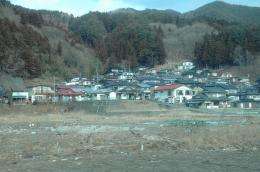
“What was striking,” Corcoran noted, “is how intact the homes and schools were just above that elevation. There was a clear line of safety. If you got above it, you were safe. If you didn’t, you weren’t. It wasn’t that far for most people – you just had to know where the line was and get to it. And most of them did.”
Japanese officials, in talking about rebuilding the village, are considering new approaches to development. Industrial, commercial and other non-residential buildings might be concentrated in the most vulnerable areas while homes, schools, hospitals and other crucial services would be located either out of the inundation zone or closer to high ground.
“That is the kind of planning the Pacific Northwest needs to consider,” Corcoran said. “It isn’t economically feasible to immediately shift our hospitals and nursing homes. But over a period of years or decades, when new facilities are being considered, preference might be given to sites at high elevations.
“A vast majority of the fatalities in Japan were among the elderly and a good portion of the others were family members and emergency personnel who went in after them when they realized they hadn’t been evacuated. Traffic jams cost lives.”
Corcoran said state and local agencies in Oregon have begun taking action, including producing new evacuation maps and improving communication and incident command plans.
“As good as our local emergency officials are, they will be overwhelmed by the sheer magnitude of the circumstances,” Corcoran said. “Preparation must begin with the individual, then focus on mutual aid among neighbors, and finally on public aid and assistance. Businesses, too, must support the safety of their employees and customers.”
There are several examples of coastal communities preparing for an earthquake and tsunami.
-- Cannon Beach has commissioned evacuation maps and inundation models, hired a community preparedness coordinator, explored a vertical evacuation structure, and is looking into caching supplies at evacuation sites;
-- The Seaside School District is studying relocating all of its schools on a common campus outside the inundation zone;
-- OSU’s Hatfield Marine Science Center in Newport has increased its educational efforts on earthquakes and tsunamis, and held evacuation drills for employees.
“The question,” Corcoran said, “is whether we are preparing at a level commensurate with the risk.”
Communities and individuals can prepare for natural disasters by understanding that they eventually will happen. Once you accept that, Corcoran said, preparation becomes second nature. Identify areas of high ground near your home, work and recreation areas. Work to make them accessible. Then conduct practice drills on how to get to them.
“Our society tends to be dismissive of drills,” Corcoran said. “They are silly, they are embarrassing and it’s usually raining. The only people who actually do drills are high schools and nursing homes because they are required to. But drills save lives, as they learned in Japan.”
A final obstacle for West Coast residents to overcome, Corcoran said, is the feeling that technology will provide the answer.
“Oregon clearly needs to increase its standards for structural design and engineering for public buildings and infrastructure – and that long-term effort is under way,” Corcoran said. “But we need to devote at least as much attention to educate and train locals and visitors on the basics of evacuation. We need to keep making progress on all fronts.”
Provided by Oregon State University


