Bird brains follow the beat: Capacity to move in time with music may be connected with ability to learn speech
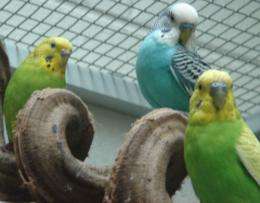
Figure 1: The budgerigar, Melopsittacus undulates, is one of several vocal-learning species of parrot, well known for its capacity to mimic human language. Credit: 2011 Yoshimasa Seki
Even though typical dance-floor activity might suggest otherwise, humans generally demonstrate a remarkable capacity to synchronize their body movements in response to auditory stimuli. But is this ability to move in time to musical rhythm a uniquely human trait?
Some animals are capable of vocal learning, changing the sounds they make in response to those they hear from other members of their species. Scientists have hypothesized that such behavior may be associated with the capacity for so-called rhythmic synchronization. Motor control of vocal organs is naturally important in vocal learning, says Yoshimasa Seki of the RIKEN Brain Science Institute in Wako. Once auditorymotor coordination in the vocal control system has been established, a similar auditorymotor transformation system for other body parts might be derived from that.
Studies in vocal-learning species have largely focused on case studies of individual animals, but Seki and colleagues conducted larger-scale experiments and found that budgerigars (Fig. 1) may have an inherent capacity for rhythmic synchronization. The researchers tested their hypothesis by training eight budgerigars to peck a button in response to the rhythm of an external metronome, which could be adjusted to present the birds with audiovisual stimuli at varying intervals.
In all 46 experiments, the birds were able to consistently respond to rhythmic beats within a certain time-frame, demonstrating successful entrainment. However, the accuracy of their timing was dependent on the tempo. Only one out of seven birds was successfully able to match the onset of each beat when the stimuli were generated at 450 millisecond intervals, while all animals achieved this feat when that interval was lengthened to 1,500 or 1,800 milliseconds.
To confirm that actual synchronization was taking place, the researchers used computer simulations of other bird behavior scenarios, such as random pecking or responding directly to individual stimuli rather than the rhythm itself. However, none of these alternative models was sufficient to explain the observed activity. Our results showed that budgerigars can show rhythmic movements synchronized with external stimuli, which means they potentially have this capability of auditorymotor entrainment as a species, says Seki.
As such, this species may offer a useful model for future investigations of the neurological mechanisms that potentially connect vocal learning with rhythmic synchronization in both birds and humans. Such studies should contribute to discussions of specific characteristics of the human speech system and its similarity to the vocal learning systems found in other animal species, explains Seki.
More information: Hasegawa, A., et al. Rhythmic synchronization tapping to an audiovisual metronome in budgerigars. Scientific Reports 1, 120 (2011).
Provided by
RIKEN
-
From lemons to lemonade: Reaction uses carbon dioxide to make carbon-based semiconductor,
32 comments
-
Thioridazine kills cancer stem cells in human while avoiding toxic side-effects of conventional cancer treatments,
3 comments
-
SpaceX private rocket blasts off for space station (Update),
42 comments
-
Climate scientists say they have solved riddle of rising sea,
31 comments
-
Landmark calculation clears the way to answering how matter is formed,
55 comments
-
osmotic pressure vs diffusion
3 hours ago
-
What would stain as translucent on light-coloured fabric?
May 26, 2012
-
How do I identify different bacteria on culture plates?
May 26, 2012
-
Why Do Dogs do Strange things...
May 25, 2012
-
What does exophillic and endophillic mean in terms of mosquito and their control?
May 24, 2012
-
Semen stains glows under black lights (uv light)?
May 23, 2012
- More from Physics Forums - Biology
More news stories
Manufacturing genes to attack flu virus
An international research team has manufactured a new protein that can combat deadly flu epidemics.
11 hours ago |
not rated yet |
0
|
Scientist: Evolution debate will soon be history
(AP) -- Richard Leakey predicts skepticism over evolution will soon be history. Not that the avowed atheist has any doubts himself.
May 26, 2012 |
3.4 / 5 (21) |
98
More plant species responding to global warming than previously thought
(Phys.org) -- Far more wild plant species may be responding to global warming than previous large-scale estimates have suggested.
May 22, 2012 |
4.6 / 5 (14) |
18
|
For monogamous sparrows, it doesn't pay to stray (but they do it anyway)
It's quite common for a female song sparrow to stray from her breeding partner and mate with the male next door, but a new study shows that sleeping around can be costly.
May 22, 2012 |
5 / 5 (2) |
8
|
Thousands of shellfish found dead in Peru
Thousands of crustaceans were found dead off the coast of Lima following the mystery mass death of dolphins and pelicans, the Peruvian Navy said Friday.
May 26, 2012 |
4.7 / 5 (7) |
7
'Unzipped' carbon nanotubes could help energize fuel cells, batteries
Multi-walled carbon nanotubes riddled with defects and impurities on the outside could replace some of the expensive platinum catalysts used in fuel cells and metal-air batteries, according to scientists at ...
Change in developmental timing was crucial in the evolutionary shift from dinosaurs to birds: study
At first glance, it's hard to see how a common house sparrow and a Tyrannosaurus Rex might have anything in common. After all, one is a bird that weighs less than an ounce, and the other is a dinosaur that ...
Computer model used to pinpoint prime materials for efficient carbon capture
When power plants begin capturing their carbon emissions to reduce greenhouse gases and to most in the electric power industry, it's a question of when, not if it will be an expensive undertaking.
T cells 'hunt' parasites like animal predators seek prey, study shows
By pairing an intimate knowledge of immune-system function with a deep understanding of statistical physics, a cross-disciplinary team at the University of Pennsylvania has arrived at a surprising finding: T cells use a movement ...
Yale study concludes public apathy over climate change unrelated to science literacy
Are members of the public divided about climate change because they don't understand the science behind it? If Americans knew more basic science and were more proficient in technical reasoning, would public consensus match ...
Land and sea species differ in climate change response: study
(Phys.org) -- Marine and terrestrial species will likely differ in their responses to climate warming, new research by Simon Fraser University and Australia’s University of Tasmania has found.
Feb 24, 2012
Rank: not rated yet