Vaccine protects against leptospirosis in cattle
January 31, 2012 By Sandra Avant

Vaccine protects against leptospirosis

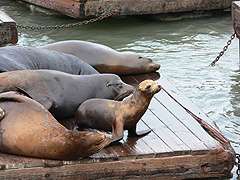
A commercial vaccine has been found to provide protection against leptospirosis, a disease that can infect all farm animals, rodents, and wildlife including California sea lions, which periodically undergo acute outbreaks. Photo courtesy of The Marine Mammal Center.

Scientists at the U.S. Department of Agriculture (USDA) have found that a commercial vaccine is effective against leptospirosis in cattle.

A widespread zoonotic disease, leptospirosis is transmitted naturally from domestic and to humans. The contagious disease, which is caused by Leptospira bacteria, is spread through contact with food, water or soil contaminated with urine from infected animals. It can affect all , rodents and wildlife.

Several years ago, retired microbiologist Richard Zuerner, veterinary medical officer David Alt and their colleagues at the Agricultural Research Service (ARS) National Center (NADC) in Ames, Iowa, tested a version of this and discovered that it induced some protection against experimental infection with Leptospira borgpetersenii serovar Hardjo, the main cause of bovine leptospirosis.

ARS is USDA's chief intramural scientific research agency, and this research supports USDA priority of promoting international food security.

Alt and his colleagues, who work at the NADC Infectious Research Unit, examined the vaccine's potency in reducing the shedding of bacteria, potentially affecting the spreading of leptospirosis in herds. They vaccinated cattle twice with this vaccine or twice with a standard or control vaccine.

To test the vaccine's ability to induce short- and long-term immunity to infection, cattle were challenged with L. borgpetersenii serovar Hardjo three months or one year after immunization.

Scientists found that the vaccine appeared to be effective at both three-month and one-year periods after vaccination. Although the vaccine did not provide complete protection from shedding at one year after vaccination, it induced greater immunologic responses and protection against shedding of leptospirosis than the standard vaccine.

After cattle were challenged three months after vaccination, bacteria were detected in the urine for several weeks, but the cattle appeared to be capable of clearing the infection, whereas non-vaccinated cattle remained infected, according to Zuerner.

Only one vaccinated animal in the year-long study was shown to have bacteria in the kidney at the end of the live challenge, but most animals had evidence of short-term kidney infections that eventually cleared, according to Zuerner.

Although the vaccine was partially successful in protecting cattle against , scientists agree that improvement is still needed.

Choosing the right vaccine depends on identifying the infecting serovar, according to Alt. The diverse organisms of Leptospira bacteria contain more than 200 serovars that can cause the disease.

Findings from this research were published in Clinical and Vaccine Immunology.

More information: Read more about this research in the January 2012 issue of Agricultural Research magazine.

Provided by USDA Agricultural Research Service

Filter


Move the slider to adjust rank threshold, so that you can hide some of the comments.


Display comments: newest first

Royale
Jan 31, 2012

Rank: not rated yet
Excellent job of acquiring a picture of cattle...
Rank not rated yet
Relevant PhysicsForums posts

More news stories

Manufacturing genes to attack flu virus

An international research team has manufactured a new protein that can combat deadly flu epidemics.

Biology / Biotechnology

created 6 hours ago | popularity not rated yet | comments 0 | with audio podcast

Scientist: Evolution debate will soon be history

(AP) -- Richard Leakey predicts skepticism over evolution will soon be history. Not that the avowed atheist has any doubts himself.

Biology / Evolution

created May 26, 2012 | popularity 3.5 / 5 (20) | comments 89

More plant species responding to global warming than previously thought

(Phys.org) -- Far more wild plant species may be responding to global warming than previous large-scale estimates have suggested.

Biology / Ecology

created May 22, 2012 | popularity 4.6 / 5 (14) | comments 18 | with audio podcast

For monogamous sparrows, it doesn't pay to stray (but they do it anyway)

It's quite common for a female song sparrow to stray from her breeding partner and mate with the male next door, but a new study shows that sleeping around can be costly.

Biology / Plants & Animals

created May 22, 2012 | popularity 5 / 5 (2) | comments 8 | with audio podcast

Thousands of shellfish found dead in Peru

Thousands of crustaceans were found dead off the coast of Lima following the mystery mass death of dolphins and pelicans, the Peruvian Navy said Friday.

Biology / Ecology

created May 26, 2012 | popularity 4.7 / 5 (7) | comments 7


Stunning image of smallest possible five-ringed structure

Scientists have created and imaged the smallest possible five-ringed structure – about 100,000 times thinner than a human hair – and you'll probably recognise its shape.

'Unzipped' carbon nanotubes could help energize fuel cells, batteries

Multi-walled carbon nanotubes riddled with defects and impurities on the outside could replace some of the expensive platinum catalysts used in fuel cells and metal-air batteries, according to scientists at ...

Change in developmental timing was crucial in the evolutionary shift from dinosaurs to birds: study

At first glance, it's hard to see how a common house sparrow and a Tyrannosaurus Rex might have anything in common. After all, one is a bird that weighs less than an ounce, and the other is a dinosaur that ...

Computer model used to pinpoint prime materials for efficient carbon capture

When power plants begin capturing their carbon emissions to reduce greenhouse gases – and to most in the electric power industry, it's a question of when, not if – it will be an expensive undertaking.

T cells 'hunt' parasites like animal predators seek prey, study shows

By pairing an intimate knowledge of immune-system function with a deep understanding of statistical physics, a cross-disciplinary team at the University of Pennsylvania has arrived at a surprising finding: T cells use a movement ...

Land and sea species differ in climate change response: study

(Phys.org) -- Marine and terrestrial species will likely differ in their responses to climate warming, new research by Simon Fraser University and Australia’s University of Tasmania has found.