First-known ginglymodian fish found from the middle triassic of Eastern Yunnan Province, China
January 9, 2012

First-known ginglymodian fish found from the middle triassic of Eastern Yunnan Province, China

Enlarge

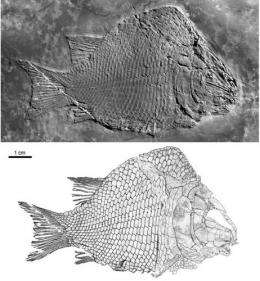
Fig. 1: Holotype of Kyphosichthys grandei gen. et sp. nov. (IVPP V10108) Credit: XU Guanghui

The Ginglymodi are a group of ray-finned fishes that make up one of three major subdivisions of the infraclass Neopterygii. Extant ginglymodians are represented by gars, which inhabit freshwater environments of North and Central America and Cuba. Drs. XU Guanghui and WU Feixiang, Institute of Vertebrate Paleontology and Paleoanthropology (IVPP), Chinese Academy of Sciences, reported the discovery of well-preserved fossils of a new ginglymodian, Kyphosichthys grandei gen. et sp. nov., from the Middle Triassic (Anisian) marine deposits (Guanling Formation) in Luoping, eastern Yunnan Province, China. The discovery documents the first known fossil record of highly deep-bodied ginglymodians, adding new information on the early morphological diversity of this group.

The new ginglymodian species is deep-bodied with a strongly arched hump between head and dorsal fin, and was found in deposits composed by thin lime mudstone interlaid with dark shale, siliceous concretion, and zebra limestone of apparent marine origin. The lithofacies of this fossil site indicate a platform margin or platform margin slope environment. Along with this new fish is a taxonomically rich fossil assemblage, including plants, invertebrates, , and other kinds of fishes.

The studies of functional morphology of extant deep-bodied fishes indicate that Kyphosichthys is not a fast swimmer but has a good performance in precise maneuvering, representing a morphological adaptation to structurally complex habitats (e.g. thick macrophyte beds, rocky areas, or ), which differs from the other members of this group. “The discovery of the new deep-bodied ginglymodian indicates that the earliest ecological diversification of the Ginglymodi occurred at least in the Middle Triassic”, said XU Guanghui, associate professor of the IVPP and first author of the study, “Its occurrence adds significantly to the ecological diversity of the already known vertebrate fauna from the Middle Triassic marine ecosystem of the eastern Yangtze Sea, which once sustained taxonomically and functionally diverse marine reptiles and other fishes.”

The earliest known neopterygians are found in the Early Triassic. Greater diversification of the Neopterygii occurred in the Middle Triassic, and the Triassic is a period of particular interest to the study of the neopterygian evolution. A cladistic analysis was carried out to assess the phylogenetic relationships of the new fish taxon Kyphosichthys with other taxa of the Neopterygii. The analysis result supports the hypothesis that the Ginglymodi are more closely related to the Halecomorphi than to the Teleostei. These phylogenetic relationships agree with Grande in the resurrection of the term Holostei to include the Ginglymodi and Halecomorphi within the crown-group Neopterygii. Kyphosichthys was identified as a ginglymodian in the Holostei. The analysis also shows that a highly deep and short fish body type has independently evolved at least three times in the stem-group neopterygians, ginglymodians, and basal teleosts within the lower neopterygians of the Triassic, represented respectively by Felberia, Kyphosichthys, and Dapedium.

The original paper was published in the journal of Chinese Science Bulletin (No.1: 111-118) in January 2012.

Journal reference: Chinese Science Bulletin search and more info website

Provided by Institute of Vertebrae Paleontology and Paleoanthropology


Rank 5 /5 (1 vote)
Relevant PhysicsForums posts

More news stories

Change in developmental timing was crucial in the evolutionary shift from dinosaurs to birds: study

At first glance, it's hard to see how a common house sparrow and a Tyrannosaurus Rex might have anything in common. After all, one is a bird that weighs less than an ounce, and the other is a dinosaur that ...

Other Sciences / Archaeology & Fossils

created 7 hours ago | popularity 5 / 5 (4) | comments 0 | with audio podcast

Social welfare cuts ultimately come with heavy price, researchers say

(Phys.org) -- Slashing government funding for Medicaid, food stamps and other programs that serve the poor – while politically popular with some lawmakers and many conservatives – may do more harm ...

Other Sciences / Social Sciences

created May 24, 2012 | popularity 4.2 / 5 (20) | comments 155

Ancient Bethlehem seal unearthed in Jerusalem

Israeli archaeologists have discovered a 2,700-year-old seal that bears the inscription "Bethlehem," the Israel Antiquities Authority announced Wednesday, in what experts believe to be the oldest artifact ...

Other Sciences / Archaeology & Fossils

created May 23, 2012 | popularity 3.3 / 5 (15) | comments 24

Dollars and sense: Why are some people morally against tax?

As the U.S. presidential election campaigns heat up, the economic debate is dominated by bailouts, austerity and, inevitably, taxation. Now a new study published in Symbolic Interaction asks why tax is such an important issue ...

Other Sciences / Social Sciences

created May 23, 2012 | popularity 2.3 / 5 (3) | comments 19

Oldest Jewish archaeological evidence on the Iberian Peninsula

German archaeologists of the Friedrich Schiller University Jena found one of the oldest archaeological evidence so far of Jewish Culture on the Iberian Peninsula at an excavation site in the south of Portugal, ...

Other Sciences / Archaeology & Fossils

created May 25, 2012 | popularity 4.2 / 5 (6) | comments 12


Stunning image of smallest possible five-ringed structure

Scientists have created and imaged the smallest possible five-ringed structure – about 100,000 times thinner than a human hair – and you'll probably recognise its shape.

'Unzipped' carbon nanotubes could help energize fuel cells, batteries

Multi-walled carbon nanotubes riddled with defects and impurities on the outside could replace some of the expensive platinum catalysts used in fuel cells and metal-air batteries, according to scientists at ...

Computer model used to pinpoint prime materials for efficient carbon capture

When power plants begin capturing their carbon emissions to reduce greenhouse gases – and to most in the electric power industry, it's a question of when, not if – it will be an expensive undertaking.

T cells 'hunt' parasites like animal predators seek prey, study shows

By pairing an intimate knowledge of immune-system function with a deep understanding of statistical physics, a cross-disciplinary team at the University of Pennsylvania has arrived at a surprising finding: T cells use a movement ...

Land and sea species differ in climate change response: study

(Phys.org) -- Marine and terrestrial species will likely differ in their responses to climate warming, new research by Simon Fraser University and Australia’s University of Tasmania has found.

Yale study concludes public apathy over climate change unrelated to science literacy

Are members of the public divided about climate change because they don't understand the science behind it? If Americans knew more basic science and were more proficient in technical reasoning, would public consensus match ...