Brazil's Petrobras reports another oil spill
January 31, 2012

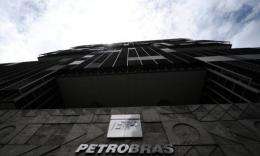
Petrobras on Tuesday reported that 160 barrels of crude oil may have spilled from a deep-water well off Sao Paulo state

Enlarge

Brazil's state-run energy giant Petrobras on Tuesday reported that 160 barrels of crude oil may have spilled from a deep-water well off Sao Paulo state but said the situation was under control.

Brazil's state-run energy giant Petrobras on Tuesday reported that 160 barrels of crude oil may have spilled from a deep-water well off Sao Paulo state but said the situation was under control.

A company statement said a production string rupture of the FPWSO Dynamic Producer (vessel platform) was detected early Tuesday, roughly 300 kilometers (180 miles) off the coast of Sao Paulo state, where water depth reaches 2,140 meters (6,600 feet).

It said the well was automatically shut down after the rupture by the and has been secured.

"A preliminary estimate indicates that 160 barrels of oil may have spilled. There is no possibility of the oil reaching the Brazilian coast," Petrobras said.

It added that an investigation was launched to determine the cause of the leak.

Petrobras said it notified the Brazilian Navy, the Brazilian Institute of Environment and Renewable Natural Resources (IBAMA) and the Brazilian National Petroleum Agency (ANP).

It was the second oil spill in Brazil in less than a week.

Last Thursday, Transpetro, a Petrobras subsidiary, said it had detected a spill off the coast of Rio Grande do Sul state but did not know how much had spilled.

Petrobras's transportation unit said it was not possible to estimate how much oil had leaked but said personnel and equipment were deployed to contain and remove the spill off the coast of the southern state.

In November, another oil spill was detected in a well operated by US energy company Chevron near the Frade field, 370 kilometers (231 miles) northeast of the coast.

The spill was eventually contained and Chevron was subject to several environmental fines.

The case was a wake-up call for Brazil as it prepares to tap huge underwater oil fields, which ANP says hold reserves that could surpass 100 billion barrels of high-quality recoverable crude.

These fields are off Brazil's southeast Atlantic beneath kilometers of ocean, bedrock, and hot salt-beds.

In 2010, Petrobras was the world's third biggest oil producer in terms of market value at $228 billion. By late last month it had fallen to 5th place, with its value down to $156 billion, according to the daily newspaper O Globo.

(c) 2012 AFP


Rank not rated yet
Relevant PhysicsForums posts

More news stories

Land and sea species differ in climate change response: study

(Phys.org) -- Marine and terrestrial species will likely differ in their responses to climate warming, new research by Simon Fraser University and Australia’s University of Tasmania has found.

Space & Earth / Environment

created 6 hours ago | popularity 3.8 / 5 (4) | comments 5 | with audio podcast

Yale study concludes public apathy over climate change unrelated to science literacy

Are members of the public divided about climate change because they don't understand the science behind it? If Americans knew more basic science and were more proficient in technical reasoning, would public consensus match ...

Space & Earth / Environment

created 8 hours ago | popularity 4.8 / 5 (5) | comments 20 | with audio podcast

10 million years needed to recover from mass extinction

It took some 10 million years for Earth to recover from the greatest mass extinction of all time, latest research has revealed.

Space & Earth / Earth Sciences

created 8 hours ago | popularity 4 / 5 (4) | comments 1 | with audio podcast

Sophisticated simulations predict future warming

The chances of our planet being hit by a global warming of 3 degrees Celsius by 2050 is as likely as it being hit by an increase of 1.4 degrees, new research shows. Presented in the journal Nature Geoscience, the British study ...

Space & Earth / Earth Sciences

created May 22, 2012 | popularity 4.1 / 5 (10) | comments 51

Aliens don't want to eat us, says former SETI director

Alien life probably isn’t interested in having us for dinner, enslaving us or laying eggs in our bellies, according to a recent statement by former SETI director Jill Tarter.

Space & Earth / Space Exploration

created May 25, 2012 | popularity 4.4 / 5 (15) | comments 41


Stunning image of smallest possible five-ringed structure

Scientists have created and imaged the smallest possible five-ringed structure – about 100,000 times thinner than a human hair – and you'll probably recognise its shape.

'Unzipped' carbon nanotubes could help energize fuel cells, batteries

Multi-walled carbon nanotubes riddled with defects and impurities on the outside could replace some of the expensive platinum catalysts used in fuel cells and metal-air batteries, according to scientists at ...

Change in developmental timing was crucial in the evolutionary shift from dinosaurs to birds: study

At first glance, it's hard to see how a common house sparrow and a Tyrannosaurus Rex might have anything in common. After all, one is a bird that weighs less than an ounce, and the other is a dinosaur that ...

Computer model used to pinpoint prime materials for efficient carbon capture

When power plants begin capturing their carbon emissions to reduce greenhouse gases – and to most in the electric power industry, it's a question of when, not if – it will be an expensive undertaking.

T cells 'hunt' parasites like animal predators seek prey, study shows

By pairing an intimate knowledge of immune-system function with a deep understanding of statistical physics, a cross-disciplinary team at the University of Pennsylvania has arrived at a surprising finding: T cells use a movement ...

Scientists develop ultra-sensitive test that detects diseases in their earliest stages

Scientists have developed an ultra-sensitive test that should enable them to detect signs of a disease in its earliest stages, in research published today in the journal Nature Materials.