77,000-year-old evidence for early 'bedding', use of medicinal plants at South African rock shelter
What were the daily lives of modern humans like more than 50,000 years ago?
Rare finds such as early ornaments, cave drawings and Middle Stone Age engravings are the subjects of a good deal of anthropological study and they provide clues. But in today's journal Science, an international team of researchers report another find that could give additional insight. What's more, it could place the use of herbal medicines much earlier than previously known.
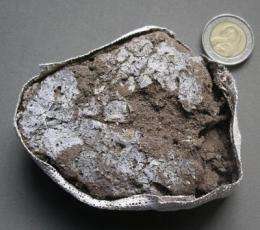
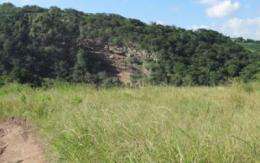
Lyn Wadley of the University of the Witwatersrand, in Johannesburg, South Africa, along with a team of archeologists, botanists and paleobotonists, recently dug up and analyzed the earliest known plant bedding at Sibudu, a South African rock shelter in Northern KwaZulu-Natal.
The plant bedding is 77,000 years old and 50,000 years older than the earliest reports of preserved bedding. It provides an intriguing look at the behavioral practices of early modern humans in Southern Africa.
"Domestic activities, like preparing and destroying plant bedding, can provide important information," said Wadley, an honorary professor at the Institute for Human Evolution at Witwatersrand.
Plant bedding is not as well known as other anthropological artifacts, but Wadley says it has the ability to provide information about changing settlement patterns and even demography.
Archeologists refer to plant bedding as a type of floor preparation constructed from plant layers. The discoveries in Sibudu suggest plant bedding there probably was used as a surface for working and sleeping, similar to how it is used in the region today.
At Sibudu, which has been undergoing digging since 1998, researchers found at least 15 layers of sediment containing plant bedding, dated between 77,000 and 38,000 years ago.
The bedding consists of centimeter-thick layers of compacted stems and leaves of sedges and rushes, extending over at least one square meter and up to three square meters of the excavated area. Some of the fossilized leaves bear perfectly preserved anatomical details like vein patterns in leaf blades and pores found in leaf and stem epidermises, called venation and stomata.
"Since leaves can simply be used to add comfort to sedge bedding we were even more surprised when we discovered that the leaves used have insecticidal properties," said Wadley. She surmised they probably were used to repel mosquitoes from the site, which is near the UThongathi River.
"The use of plants and other biological organisms and substances for medicine and other health-related uses is a fascinating aspect of modern human cultures," said Carolyn Ehardt, program director for biological anthropology at the National Science Foundation, which partially funded the research. "Anthropologists have been studying human ethnomedical and ethnobiological systems extensively, aiding in the discovery of new drugs and other therapies. It is quite interesting to gain this level of historical depth to the apparent recognition by these people of the beneficial properties in the local flora."
Marion Bamford, a botanist with the Bernard Price Institute for Palaeontological Research at Witwatersrand, identified the sedges as belonging to a plant called Cryptocarya woodii, or River Wild-quince. C. woodii contains chemicals that have insecticidal and larvicidal properties.
The chemicals have different effects on different insects. "For some insects there is a 'knock-down' effect," said Wadley. "Others are repelled and the breeding rate is interfered with amongst some insects."
C. woodii is in the same family as the Bay leaf, which has culinary use, but is also suitable for storing in grains to repel insects that would eat them.
The research included examining blocks of sediment from the site that had been undisturbed for thousands of years to determine their contents. Paul Goldberg and Francesco Berna, National Science Foundation-supported archaeological scientists at Boston University, analyzed thin sections of sediment that preserved the original contextual integrity of the deposits at the millimeter to centimeter scale.
Their micromorphological analysis found evidence of individual human activities, including the construction of hearths and bedding and the maintenance of occupational surfaces through the sweep out of hearths.
"I don't think we would have had this confirmation, or at least impetus, if we hadn't had done the original thin section work," said Goldberg. "We were able to recognize several different types of deposits that are only centimeters thick. Among them were layers composed mainly of phytoliths, some of which were clearly sedges," he said.
Phytoliths are minute particles formed of mineral matter by a living plant and fossilized in rock. In this case, researchers found fossilized sedge particles.
"We could also observe in thin section some pieces of clay that was likely attached to the roots of the sedges from where they were taken down at the stream below the site," said Goldberg.
In addition, the team's analysis confirmed the repeated burning of plant bedding. Most likely, "the bedding was burnt to rid it of pests--insects and perhaps rodents--and to clean up decaying organic material," said Wadley.
"Since sites are usually simply abandoned when they become fusty, the implication is that people wanted to reuse Sibudu regularly, and more regularly than would be allowed by natural processes of decay to clean the site. Burning was probably a more effective way to get rid of insects than the use of herbs."
According to Wadley, the discovery is particularly well timed, since future work at the site may be in jeopardy. Local officials plan to construct a large housing tract near the Sibudu rock shelter that Wadley says would irreparably damage the site and prevent future excavation. She and her colleagues hope this discovery will emphasize the importance of Sibudu as an irreplaceable cultural resource for South Africa and the rest of the world.
Christine Sievers with the School of Geography, Archaeology and Environmental Studies at Witwatersrand and Christopher Miller with the Institute for Archaeological Sciences at the University of Tübingen in Germany also contributed to this research.
Provided by University of the Witwatersrand


