'Most poor people don't live in the poorest countries'
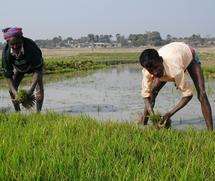
(PhysOrg.com) -- An Oxford University study of 1.65 billion of the world's poor shows that over twice as many live in 'middle-income' countries as in 'low-income' countries.
Researchers used a poverty measure which assesses a range of deprivations in health, education and living standards at the household level to uncover vast numbers of poor people in middle-income countries. They found that 1,189 million (72 per cent) of the world's poor live in middle-income countries as compared with 459 million living in low-income countries.
They also discovered that far greater numbers of poor people in middle-income countries are living in 'severe' poverty- 586 million as compared with 285 million in low-income countries. Severe poverty captures the very poorest of the poor - those whose poverty is most intense. Entire regions within middle-income countries also have poverty rates comparable to the world's poorest countries, the findings show.
The poverty measure which produced these findings - the Multidimensional Poverty Index or MPI - takes into account a range of deprivations in areas like education, malnutrition, child mortality, sanitation and services. By measuring directly which deprivations poor people experience together, the research team has produced a high-resolution picture of where the poor live. If people are deprived in one-third or more of the (weighted) indicators they are identified as 'MPI poor'. MPI poor people who are actually deprived in more than half the weighted indicators are identified as 'severely poor'.
The poverty measure was devised jointly by Oxford University's Oxford Poverty and Human Development Initiative (OPHI) and the UNDP's Human Development Report Office for the flagship Human Development Report. The MPI was featured in the 2011 and 2010 Human Development Reports as one of three experimental new indices complementing the Reports' annual Human Development Index.OPHI researchers have now further updated and expanded the MPI, including new analysis of regional disparities in MPI poverty within countries and changes to poverty over time. The OPHI researchers analysed the most recent publicly available household survey data for 109 countries, covering 93 per cent of people living in low and middle-income countries.
OPHI Director, Dr. Sabina Alkire, said: 'If you apply our global poverty measure, you see that most of the world's poor do not live in low-income countries as you might suppose. We found that nearly three-quarters of the poor live in middle-income countries - along with far greater numbers of the poorest of the poor. These findings are startling. We knew from income data that poverty in middle income countries was high - but now we also see that "multidimensionally" poor people in middle-income countries are not just barely poor: there are many severely poor people among them too, people who have simply been bypassed as their nation's comparative wealth increased.'
Dr. José Manuel Roche, who oversaw the MPI calculations with Dr. Alkire in 2011, said: "We use household surveys to see what deprivations each person experiences and create an individual poverty profile. We then build out to examine poverty within states and provinces, countries and world regions. The MPI reveals some dramatic disparities in the rates and intensity of poverty within countries, usually hidden by national averages. Hopefully, these findings will help policy makers to focus on delivering some benefits of growth to the poorest."
Key findings about specific countries and regions
*Half of all MPI poor people live in South Asia and 29 per cent in Sub-Saharan Africa. South Asia is home to 827 million MPI poor people, compared with 473 million in Sub-Saharan Africa.*Sub-Saharan Africa has the highest MPI poverty of any world region. However, the poorest 26 sub-national regions of South Asia (home to 519 million MPI poor people), have higher MPI poverty than Sub-Saharan Africa's 38 countries, which 473 million MPI poor people call home. These 26 sub-national regions and 38 countries have comparable rates of multidimensional poverty.
*Nigeria (a middle-income country) is Africa's largest oil producer, but its North East region has higher MPI poverty than the poorest region of Liberia, a low-income country still recovering from a prolonged civil war. The North East of Nigeria also has over five times more MPI poor people than the entire country of Liberia.
*Disparities within countries can be startlingly wide. Overall 41 per cent of people in the Republic of Congo are MPI poor, but in the Likouala region, 74 per cent of people are poor; whereas in Brazzaville, the capital region, 27 per cent of people are poor. In Kenya's regions, the percentage of MPI poor people ranges from 4 to 86 per cent; in Timor-Leste, from 29 to 86 per cent; and in Colombia from 1 to 15 per cent.
*Income classifications hide wide disparities in MPI poverty. In low-income countries, the percentage of people living in MPI poverty ranges from 5 per cent in Kyrgyzstan to 92 per cent in Niger. In lower middle-income countries, this varies from 1 per cent in Georgia to 77 per cent of people in Angola who are MPI poor; and in upper middle-income countries, from 0 per cent in Belarus to 40 per cent in Namibia.
Using updated data for 25 countries, OPHI researchers analysed a total of 109 countries in 2011, with a combined population of 5.3 billion, which represents 79 per cent of the world's population (using 2008 population figures). About 1.65 billion people in the countries covered - 31 per cent of their entire population - live in multidimensional poverty.
Provided by Oxford University


