Africa: the new pot of gold for mobile telecoms
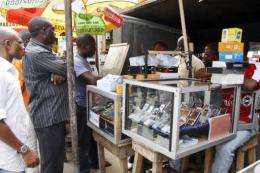
Africa's lag in land-based telecoms infrastructure has propelled the continent directly into the mobile age, opening up short-term growth prospects unparalleled in the world.
Sector players have seen growth especially in mobile Internet and banking services, as people use cellphone technology for lack of landlines or cable Internet.
"Africa is the last market to emerge. China's emerged, India's emerged. So where else outside Africa need emerging? The growth opportunity is right here," said Nicolas Regisford, co-founder of Mi-Fone, a South African company that specialises in producing low-cost handsets.
Mobile subscribers in Africa have increased by 20 percent annually over the past five years and will reach over 735 million by the end of 2012, a study by global mobile operators association GSMA found in November.
"Africa is now the world’s second largest mobile market by connections after Asia, and the fastest growing mobile market in the world," according to the GSMA Africa Mobile Observatory 2011 report.
Industry players are equally excited over the commercial prospects posed by the continent's one billion people.
"Samsung is expecting revenue within Africa to amount $15 billion, with the SADC region contributing about 25 percent of that figure, by 2015," said Gavin Clare, the company's representative in Zimbabwe, referring to the 15-country Southern African Development Community.
This philosophy also drives Mi-Fone, which eyes the immense market of consumers seeking entry-level phones.
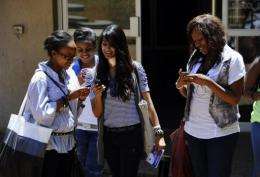
"The African person wants a mobile device which will be doing mobile payments and accessing the world wide web. Right now, a lot of people cannot afford the smartphones that are flooding the market," said Regisford.
Ironically, this lack of traditional infrastructure, telecom and landline services, Internet penetration and broadband access, and banking services drives this growth in Africa, according to mobile systems expert Tomi Ahonen.
"As it happens the global Internet industry believes that the future of Internet is mobile. The global telecom industry believes that the future of the telecom industry is mobile, and the global money industry is starting to believe that the future of money is mobile."
One case in point is Kenya, already the world's largest mobile financial services user in relation to its GDP. Almost 18 million Kenyans use their cellphones as a bank account to deposit or transfer money and pay their accounts -- contributing 8.0 percent of the GDP.
Several other African countries are following suit.
The "maturity of the market", as financiers call it, is another asset. Applications dominate the mobile world in Europe and the United States, but earn relatively little. On the other hand the mobile business in Africa keeps earning through more conventional services like text messages and voice calls.
"The business model around the basic services on mobile are much more realistic, and robust," said Ahonen at a workshop in Johannesburg in November.
This cellphone explosion in Africa contributes as much as $56 billion to the region's economy, or 3.5% of its gross domestic product (GDP), but the indirect effect on growth is perhaps even higher.
"Local development of telecommunication has a direct impact on GDP. This is a professional tool. Many handcrafters or retailers dramatically need to be connected to the world to make business," said Regisford.
"In developing countries, for every 10 percent increase in mobile penetration there is a 0.81 percentage point increase in a country’s GDP," the GSMA report found.
All the same a few barriers, like taxes on cellphones, hamper this growth, which could rob governments of more revenues if mobile phone penetration increased.
In Kenya tax revenues from mobile operators jumped a third in 2011 from 2009, when taxes were reduced on handsets.
"The Kenyan government’s abolition of the 16 percent general sales tax on mobile handsets in 2009 has resulted in handset purchases increasing by more than 200 percent," accoroding to the GSMA report.
(c) 2011 AFP


