WWF sounds warning on caviar
November 14, 2011

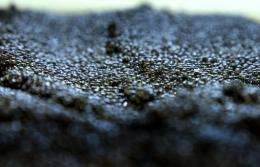
Illegal caviar can sell for 6,000 euros ($8,200) or more per kilo

Enlarge

Poaching and illegal trade in sturgeon caviar persist in Romania and Bulgaria, environmental group WWF has warned, posing a serious risk to the highly threatened species of fish. A total of 52.5 kilos of illegal caviar, retailing for upwards of 6,000 euros ($8,200) per kilo, originating in the two countries were reported by European Union member states between 2000 and 2009, the report said.

Poaching and illegal trade in sturgeon caviar persist in Romania and Bulgaria, environmental group WWF warned on Monday, posing a serious risk to the highly threatened species of fish.

A total of 52.5 kilos (115.7 pounds) of illegal caviar, retailing for upwards of 6,000 euros ($8,200) per kilo, originating in the two countries were reported by European Union member states between 2000 and 2009, the report said.

"The real volume of illegal trade is likely to be considerably higher," the report's author Katalin Kecse-Nagy said in the statement.

"Any illegal trade poses an unacceptable risk to these highly threatened species."

The Black Sea is one of the most important fisheries in the world, second only to the . The Danube, as one of the major feeder rivers and estuaries of the Black Sea, is crucial for the fish.

According to the World Sturgeon , the Danube is the only large river system in Europe where protection of existing but dwindling sturgeon stocks is still possible.

Fishing and export of sturgeon and sturgeon products of wild origin was banned in Romania in 2006 for 10 years, while Bulgaria is currently under a one-year ban, the WWF said.

The WWF report recommended that Sofia and Bucharest strengthen their enforcement agencies, while also insisting for closer monitoring by the EU and more awareness among consumers and traders.

"The EU has a major responsibility to regulate the caviar trade because EU member states are the largest consumers of caviar from Romania and the second largest consumer of caviar from Bulgaria," WWF sturgeon expert Jutta Jahrl said.

"It is crucial that traders and consumers do not buy unlabelled caviar -- this simple act would strike a major blow against the ," the statement said.

"The EU must close every loophole in order to save sturgeons from extinction."

Giant sturgeons, an ancient fish which outlasted the dinosaurs, have been critically endangered by overfishing for their caviar -- uncooked roe or eggs -- and by cutting off their migration routes and altering their habitat.

(c) 2011 AFP


Rank not rated yet
Relevant PhysicsForums posts

More news stories

Manufacturing genes to attack flu virus

An international research team has manufactured a new protein that can combat deadly flu epidemics.

Biology / Biotechnology

created 6 hours ago | popularity not rated yet | comments 0 | with audio podcast

Scientist: Evolution debate will soon be history

(AP) -- Richard Leakey predicts skepticism over evolution will soon be history. Not that the avowed atheist has any doubts himself.

Biology / Evolution

created May 26, 2012 | popularity 3.5 / 5 (20) | comments 89

More plant species responding to global warming than previously thought

(Phys.org) -- Far more wild plant species may be responding to global warming than previous large-scale estimates have suggested.

Biology / Ecology

created May 22, 2012 | popularity 4.6 / 5 (14) | comments 18 | with audio podcast

For monogamous sparrows, it doesn't pay to stray (but they do it anyway)

It's quite common for a female song sparrow to stray from her breeding partner and mate with the male next door, but a new study shows that sleeping around can be costly.

Biology / Plants & Animals

created May 22, 2012 | popularity 5 / 5 (2) | comments 8 | with audio podcast

Thousands of shellfish found dead in Peru

Thousands of crustaceans were found dead off the coast of Lima following the mystery mass death of dolphins and pelicans, the Peruvian Navy said Friday.

Biology / Ecology

created May 26, 2012 | popularity 4.7 / 5 (7) | comments 7


Stunning image of smallest possible five-ringed structure

Scientists have created and imaged the smallest possible five-ringed structure – about 100,000 times thinner than a human hair – and you'll probably recognise its shape.

'Unzipped' carbon nanotubes could help energize fuel cells, batteries

Multi-walled carbon nanotubes riddled with defects and impurities on the outside could replace some of the expensive platinum catalysts used in fuel cells and metal-air batteries, according to scientists at ...

Change in developmental timing was crucial in the evolutionary shift from dinosaurs to birds: study

At first glance, it's hard to see how a common house sparrow and a Tyrannosaurus Rex might have anything in common. After all, one is a bird that weighs less than an ounce, and the other is a dinosaur that ...

Computer model used to pinpoint prime materials for efficient carbon capture

When power plants begin capturing their carbon emissions to reduce greenhouse gases – and to most in the electric power industry, it's a question of when, not if – it will be an expensive undertaking.

T cells 'hunt' parasites like animal predators seek prey, study shows

By pairing an intimate knowledge of immune-system function with a deep understanding of statistical physics, a cross-disciplinary team at the University of Pennsylvania has arrived at a surprising finding: T cells use a movement ...

Land and sea species differ in climate change response: study

(Phys.org) -- Marine and terrestrial species will likely differ in their responses to climate warming, new research by Simon Fraser University and Australia’s University of Tasmania has found.