200-meter-long bridges without expansion joints: Is it possible?

Expansion joints are a nightmare in the maintenance of highway bridges. After a few decades, the junction points between the structure and the road begin to show signs of deterioration. Scientists at EPFL are attempting to do away with this costly technique, and have set up a life-size experiment on the campus.
Switzerland is a country with many bridges. The highways are no exception to this rule – they are built very straight, and straddle over hills and valleys, easily coping with the difficult topography. All year long, the structures undergo variations in temperature and all kinds of weather changes. They are therefore fitted at each end with concrete and steel joints enabling the structure to flex. The weak point of these elements, positioned on the abutment between the ground and the bridge, is due to the fact that they are continuously in contact with air, water and de-icing salts. After 25 to 30 years, wear and tear take their toll, steel corrodes, and the characteristics of the land may change and prevent the joint from performing correctly. “The cost of maintenance of a roadway joint is estimated at about 100,000 Swiss francs, so imagine what it costs to repair 28 joints, as the canton of Vaud recently found out. On top of that you have to add all the disruptions to traffic,” explains Professor André-Gilles Dumont, who heads the Laboratory of Traffic Facilities (LAVOC).
Semi-integral bridges
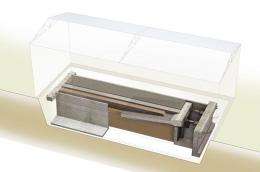
To avoid these inconveniences, short- and medium-length bridges are now built without expansion joints. The bridge is extended with a transition slab which is buried under the embankment and absorbs the distortions. According to the Federal Roads Office, this technique only applies to structures with a length of 60 meters maximum. The Structural Concrete Laboratory (IBéton) has initiated an innovative research program. “We demonstrate that it’s possible to do away with expansion joints for bridges over several hundred meters long”, explains Professor Aurélio Muttoni. “If you double the length of the bridge, you double the amplitude of the movements caused by expansion or contraction. The challenge is to be able to eliminate expansion joints on future big bridges and modify those of existing bridges – and there are many of these in Switzerland.”
On open-air laboratory
The LAVOC is currently organizing a life-size experiment. The scientists have built a replica on a 1:1 scale of an integral bridge abutment. For their part, the Geodetic Engineering Laboratories (TOPO) are focusing on ground distortion. Lastly, the Ibéton laboratory has designed the transition slab which will be installed in a ditch. Hydraulic cylinders will simulate the movement of the bridge by pulling or pushing the transition slab. The asphalt blacktop will be the same as that used on Swiss highways.
To simulate the effect of the movement of vehicles, the engineers will deploy a 22-ton steamroller. They will thus be able to assess the compression of the embankment. Lastly, the scientists will check the settling of the profile and capture the distorted surface in 3D. Bertrand Merminod is experimenting with two technologies: the first one – proven – uses piles planted in the ground. The second, more recent, uses laser scanning. “This latter process is commonly used in mines to estimate the volume which needs to be excavated. With more than one point per square centimeter, it gives a high definition representation of the surface .” At the end of the year, the scientists will know if it is possible to design a large bridge without using expansion joints.
Provided by Ecole Polytechnique Federale de Lausanne


