A challenging decade for Britain's mammals
September 27, 2011

A challenging decade for Britain's mammals

Enlarge

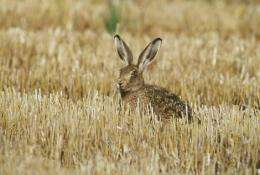
Whilst brown hare numbers have risen many other mammal species have declined. Photo: Robin Hamilton

(PhysOrg.com) -- This year’s State of Britain's Mammals report shows that over the last decade some of our most endangered mammal species have bounced back but that many others continue to decline.

The report is produced annually in collaboration with Oxford University’s Wildlife Conservation Research Unit (WildCRU) and this year focuses on how our have fared over the past ten years – looking in particular at whether the UK Biodiversity Action Plan (BAP) targets set for them have been met, as well as issues surrounding bovine tuberculosis and habitat loss.

The researchers found that whilst four of the original terrestrial mammals BAP- listed in the mid 1990s - otters, water voles, pipistrelles and greater horseshoe bats - have achieved or, in some cases, exceeded their targets; some species have been added to the list and are still declining, including some of the most endangered species: red squirrels, Scottish wildcats, mountain hares, harvest mice, hazel dormice, and, in rural areas, hedgehogs.

‘Over the last decade, through the monitoring efforts of many, we have gathered evidence of population trends for many of our mammal species in response to the changing health of the environment they depend upon,’ said report author Professor David Macdonald, Director of Oxford University’s WildCRU. ‘This scientific evidence on species and their habitats is essential for prioritising conservation actions at landscape level and is also an essential tool for measuring the success of future conservation action.’

Jill Nelson, CEO of the People's Trust for Endangered Species (PTES), which raised and awarded £1m on the conservation of mammals over the last ten years, said: ‘Whilst we are celebrating the £1million that has benefited endangered British mammals such as the hazel dormouse and water vole, we cannot be complacent about the ongoing threats to our wildlife. British mammals and their natural surroundings face new and different threats over the years, from climate change to increased urbanisation to conflict with non-native species.

'At PTES, we hope to bring about positive change for our threatened wildlife and natural environment, but this year’s retrospective edition of the State of Britain’s highlights that there is still more that we can do in the future to help.’

Provided by Oxford University search and more info website


Rank not rated yet
Relevant PhysicsForums posts

More news stories

Scientist: Evolution debate will soon be history

(AP) -- Richard Leakey predicts skepticism over evolution will soon be history. Not that the avowed atheist has any doubts himself.

Biology / Evolution

created 16 hours ago | popularity 3.3 / 5 (17) | comments 51

More plant species responding to global warming than previously thought

(Phys.org) -- Far more wild plant species may be responding to global warming than previous large-scale estimates have suggested.

Biology / Ecology

created May 22, 2012 | popularity 4.6 / 5 (14) | comments 18 | with audio podcast

Thousands of shellfish found dead in Peru

Thousands of crustaceans were found dead off the coast of Lima following the mystery mass death of dolphins and pelicans, the Peruvian Navy said Friday.

Biology / Ecology

created May 26, 2012 | popularity 4.8 / 5 (4) | comments 7

For monogamous sparrows, it doesn't pay to stray (but they do it anyway)

It's quite common for a female song sparrow to stray from her breeding partner and mate with the male next door, but a new study shows that sleeping around can be costly.

Biology / Plants & Animals

created May 22, 2012 | popularity 5 / 5 (2) | comments 7 | with audio podcast

Study uncovers secret to speedy burrowing by razor clams

(Phys.org) -- If you look at a razor burrowing clam sitting in a bucket, you’d never guess that it could burrow itself down into the soil, much less do it with any speed. Razor clams look like fat straws, ...

Biology / Plants & Animals

created May 25, 2012 | popularity 1 / 5 (1) | comments 3 | with audio podcast report


Nvidia trumpets Tegra 3 phone design wins for 2012

(Phys.org) -- Nvidia’s competitive war paint has a name, Tegra 3. On the heels of Nvidia announcements about lowering costs of its Tegra 3 processors and Nvidia-enabled tablets running Android Ice Cream ...

Browser wars flare in mobile space

The browser wars are heating up again, but this time the fight is for dominance of the mobile Internet.

Dell tablet leak: 10.1-inch display, two-battery choice

(Phys.org) -- Headline after headline talks about vendors’ tablets in the wings as likely number-one contenders for the iPad. Such claims have justifiably been taken with a grain of salt, considering ...

Keep food safety in mind this memorial day weekend

(HealthDay) -- Picnics, parades and cookouts are as much a part of Memorial Day weekend as tributes to the United States' war veterans.

Social welfare cuts ultimately come with heavy price, researchers say

(Phys.org) -- Slashing government funding for Medicaid, food stamps and other programs that serve the poor – while politically popular with some lawmakers and many conservatives – may do more harm ...

Is a classical electrodynamics law incompatible with special relativity?

(Phys.org) -- The laws of classical electromagnetism that were developed in the 19th century are the same laws that scientists use today. They include Maxwell’s four equations along with the Lorentz la ...