Finding mechanism behind bacteria's biological clock
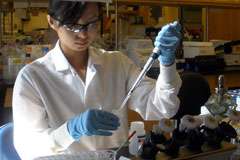
(PhysOrg.com) -- A discovery by a professor at the University of California, Merced, is providing a deeper understanding of the factors that control biological clocks.
Biochemistry professor Andy LiWang and his research team found how three proteins interact to drive the circadian rhythm of cyanobacteria, which is believed to be the oldest organism on Earth.
All life — from bacteria to plants to humans — have evolved on Earth to anticipate sunrise and sunset and, consequently, display daily or circadian rhythms in behavior, physiology and metabolism. An internal clock generates these rhythms, which help regulate health and fitness for each species.
However, it was not known how these biological clocks work at the level of biochemical mechanism. In this respect, LiWang’s study represents a critical step forward in cracking the science behind them.
“These findings help pave the way for researchers who are studying the circadian rhythms of higher organisms,” LiWang said.
The results were published recently in the Proceedings of the National Academy of Sciences and are an example of the campus’ innovative research toward health-related problems. Studies have shown circadian rhythms are involved with obesity, cancer, neurological disease and diabetes, LiWang said.
A person’s biological functions shift significantly in the course of 24 hours as his or her circadian rhythms anticipate changes in daylight and temperature, LiWang said. Understanding what causes this could provide insights into health and diseases.
The researchers found that it’s not only the shape of the proteins that effects how they interact, but also their flexibility. One of the proteins, in the course of a 24-hour cycle, shifts from being squishy to hard and then back to squishy. The changes lead to all three proteins connecting and disconnecting.
Recent studies have shifted the way researchers look at biological clocks. It’s now believed the proteins are more involved than previous thought.
Provided by University of California


