Study will determine whether viruses can help orchids
July 4, 2011

Study will determine whether viruses can help orchids

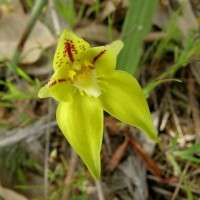
Plant scientists from Murdoch University will be investigating whether the viruses hosted by orchids in Western Australia are actually benefitting them under the changing climatic conditions.

Professor Michael Jones, Dr Stephen Wylie and their team from the School of and say that in some natural ecosystems, ancient associations between viruses and help to protect their hosts from physical stresses.

“Plant viruses have traditionally been blamed for causing disease and death in plants,” explained Professor Jones, whose study has been made possible by an ARC Linkage Grant. “But we think there may also be benefits.

“An exciting part of this research will be to investigate the physiological responses of native orchids under heat and drought stresses and determine the roles viruses have in mediating that response.

“We will test whether the ancient associations between plants and viruses are maintained where both parties benefit in some way. For example, in the plant Arabidopsis, the Cauliflower mosaic virus infection induces the expression of some protective proteins which are also expressed when plants are stressed, such as by high and low temperatures and drought.”

The research team will employ new genome sequencing techniques, which can generate up to 30 gigabases of sequence data per run, to identify and understand the true diversity of viruses and virus-like elements in the orchids.

The team will then use special software to assemble virus genome sequences and determine the host plant’s response to the virus at the gene level.

Dr Wylie said: “This work will open the floodgates on new virus discovery in our region, with the techniques developed being applicable to a wide range of other biological systems worldwide.

“The results will also be of critical importance in informing conservation strategies for terrestrial orchids and other flora within WA.”

The Australian Orchid Foundation and Kings Park and Botanic Gardens in Perth will together contribute $90,000 towards the project over the next three years.

Professor Jones and Dr Wylie will also be collaborating with Professor Kingsley Dixon, Science Director at Kings Park and Botanic Gardens in Perth, and Professor Marilyn Roossinck at the American-based Samuel Roberts Noble Foundation on the research.

Professor Roossinck’s previous investigations stimulated the idea for the orchid project, said Professor Jones.

“She found that the mutualistic association between a virus, a fungus and a grass allowed the grass to grow at much higher soil temperatures.”

The research will use the sequencing techniques developed during Dr Wylie’s previous study with Department of Agriculture and Food Western Australia (DAFWA) researchers into the movement of from plants grown in nurseries for rehabilitation projects, and between crops and native plants. As a result of his work, Dr Wylie discovered virus infections in critically endangered spider and donkey in south-western Australia.

Provided by Murdoch University


Rank not rated yet
Relevant PhysicsForums posts

More news stories

Manufacturing genes to attack flu virus

An international research team has manufactured a new protein that can combat deadly flu epidemics.

Biology / Biotechnology

created 34 minutes ago | popularity not rated yet | comments 0 | with audio podcast

Scientist: Evolution debate will soon be history

(AP) -- Richard Leakey predicts skepticism over evolution will soon be history. Not that the avowed atheist has any doubts himself.

Biology / Evolution

created 19 hours ago | popularity 3.3 / 5 (18) | comments 69

More plant species responding to global warming than previously thought

(Phys.org) -- Far more wild plant species may be responding to global warming than previous large-scale estimates have suggested.

Biology / Ecology

created May 22, 2012 | popularity 4.6 / 5 (14) | comments 18 | with audio podcast

Thousands of shellfish found dead in Peru

Thousands of crustaceans were found dead off the coast of Lima following the mystery mass death of dolphins and pelicans, the Peruvian Navy said Friday.

Biology / Ecology

created May 26, 2012 | popularity 4.8 / 5 (4) | comments 7

For monogamous sparrows, it doesn't pay to stray (but they do it anyway)

It's quite common for a female song sparrow to stray from her breeding partner and mate with the male next door, but a new study shows that sleeping around can be costly.

Biology / Plants & Animals

created May 22, 2012 | popularity 5 / 5 (2) | comments 7 | with audio podcast


Change in developmental timing was crucial in the evolutionary shift from dinosaurs to birds: study

At first glance, it's hard to see how a common house sparrow and a Tyrannosaurus Rex might have anything in common. After all, one is a bird that weighs less than an ounce, and the other is a dinosaur that ...

Computer model used to pinpoint prime materials for efficient carbon capture

When power plants begin capturing their carbon emissions to reduce greenhouse gases – and to most in the electric power industry, it's a question of when, not if – it will be an expensive undertaking.

'Unzipped' carbon nanotubes could help energize fuel cells, batteries

Multi-walled carbon nanotubes riddled with defects and impurities on the outside could replace some of the expensive platinum catalysts used in fuel cells and metal-air batteries, according to scientists at ...

T cells 'hunt' parasites like animal predators seek prey, study shows

By pairing an intimate knowledge of immune-system function with a deep understanding of statistical physics, a cross-disciplinary team at the University of Pennsylvania has arrived at a surprising finding: T cells use a movement ...

Yale study concludes public apathy over climate change unrelated to science literacy

Are members of the public divided about climate change because they don't understand the science behind it? If Americans knew more basic science and were more proficient in technical reasoning, would public consensus match ...

Same gene that stunts infants' growth also makes them grow too big: research

UCLA geneticists have identified the mutation responsible for IMAGe* syndrome, a rare disorder that stunts infants' growth. The twist? The mutation occurs on the same gene that causes Beckwith-Wiedemann syndrome, which makes ...