Researchers create reprogrammed stem cells for disease studies
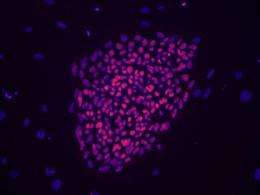
(PhysOrg.com) -- The University of Michigan's Consortium for Stem Cell Therapies has achieved another of its primary goals: reprogramming adult skin cells so they behave like embryonic stem cells.
The reprogrammed cells are called induced pluripotent stem cells, or iPS cells. They display many of the most scientifically valuable properties of embryonic stem cells while enabling researchers to bypass embryos altogether.
U-M researchers will use the iPS cells side by side with human embryonic stem cells to study the origin and progression of various diseases and to search for new treatments. Three of the consortium's first five iPS cell lines came from skin cells donated by patients with bipolar disorder and will be used to study that condition.
"The two main goals we had when we started the consortium were to make human embryonic stem cell lines and iPS cell lines. Now we've accomplished both those objectives," said consortium co-director Sue O'Shea, a professor of cell and developmental biology at the Medical School.
The Consortium for Stem Cell Therapies was formed in March 2009. In October 2010, consortium researchers announced they had created the state's first human embryonic stem cell line. Six months later they announced they had created the state's first human embryonic stem cell lines that carry the genes responsible for inherited disease.
One of the consortium's central goals has been to create disease-affected cell lines of both iPS cells and human embryonic stem cells, then to compare them.
"It's a niche that we need to fill," O'Shea said. "We're really poised to do something important by studying gene expression and disease progression in both types of cells."
When human iPS cells burst onto the scene in 2007, they were heralded by some as likely replacements for the more controversial human embryonic stem cells they mimic. But recent studies have uncovered some important differences between iPS cells and human embryonic stem cells, and most stem cell researchers say continued work on both types of cells—along with adult stem cells—is needed.
"This is another major step forward for medical science in Michigan. Now that we have proven that we can create both embryonic stem cell lines and iPS lines carrying the genetic defects for specific diseases, we can really begin exploring the causes and progression of those diseases, with the ultimate goal of finding new therapies for patients," said Dr. Eva Feldman, director of the A. Alfred Taubman Medical Research Institute.
"We believe the day may not be too far off when we can use stem cells to preserve and regenerate tissue damaged by disease. This truly puts this university, as well as this state, at the forefront of medical discovery."
Consortium workers created the iPS cells using the most common of several laboratory techniques: They used a virus to deliver four genes that genetically reprogrammed human skin cells into an embryonic-like state. Then, various tests were performed over a period of several months to confirm that the reprogrammed cells are pluripotent, meaning that they have the ability to produce all the cell types in the adult body. The skin cells were donated by research volunteers.
"The production of iPS cells marks an important milestone in the consortium's progress toward understanding stem cell biology and using this knowledge to treat devastating genetic diseases," said Gary Smith, professor of obstetrics and gynecology and co-director of the Consortium for Stem Cell Therapies.
"Our next steps are to compare and contrast human embryonic stem cells and iPS cells to identify their individual strengths and limitations That will guide us toward evidence-based medical decisions as to which type of stem cell should be used to understand disease onset and progression, for drug-treatment screening, and for future cell replacement therapies."
The project required approval by U-M's Human Pluripotent Stem Cell Research Oversight Committee. The committee is composed of physicians, scientists, ethicists, attorneys and community leaders who evaluated whether the project would be conducted ethically, legally and to the benefit of patients.
While the achievement is a first for the consortium, the five new cell lines are not the first iPS cell lines created on the University of Michigan campus. U-M neurologist Jack Parent's laboratory created iPS cell lines more than a year ago for a study of an inherited form of epilepsy called Dravet syndrome.
The consortium's iPS cell lines will be shared with researchers across campus, and consortium personnel will train other U-M researchers in the techniques required to make iPS cells.
"This lab has the facilities and the expertise to really help other people make the lines from patients carrying genetic disease to facilitate studies of disease development," O'Shea said.
Provided by University of Michigan


