Finally, an E. coli answer: It was the sprouts
Specialists in high-tech labs tested thousands of vegetables as they hunted for the source of world's deadliest E. coli outbreak, but in the end it was old-fashioned detective work that provided the answer: German-grown sprouts.
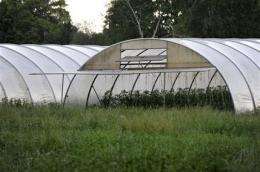
After more than a month of searching, health officials announced Friday they had determined that sprouts from an organic farm in the northern German village of Bienenbuettel were the source of the outbreak that has killed 31 people, sickened nearly 3,100 and prompted much of Europe to shun vegetables.
"It was like a crime thriller where you have to find the bad guy," said Helmut Tschiersky-Schoeneburg, head of Germany's consumer protection agency.
It's little surprise that sprouts were the culprit - they have been implicated in many previous food-borne outbreaks: ones in Michigan and Virginia in 2005, and large outbreak in Japan in 1996 that killed 11 people and sickened more than 9,000.
While sprouts are full of protein and vitamins, their ability to transmit disease makes some public health officials nervous. Sprouts have abundant surface area for bacteria to cling to, and if their seeds are contaminated, washing won't help.
"E. coli can stick tightly to the surface of seeds needed to make sprouts and they can lay dormant on the seeds for months," said Stephen Smith, a microbiologist at Trinity College in Dublin.
Once water is added to make them grow, the number of bacteria carried within the seeds can reproduce up to 100,000 times.
German investigators tracked the path of the bacteria step by step, from hospital patients struggling with diarrhea and kidney failure, to restaurants where they may have gotten sick, to specific meals and ingredients, to industrial food suppliers and the farms that grew the produce.
And they still have more questions to answer, such as what contaminated the sprouts in the first place? Bad seeds, contaminated water, nearby animals, the answer is still elusive.
Interviews with thousands of patients - mostly women between ages 20 to 50 with healthy lifestyles - led investigators to conclude initially that salads could be the problem.
Health officials immediately warned consumers to avoid cucumbers, tomatoes and lettuce - causing huge losses to European farmers as demand plummeted for their produce - but the seemingly ubiquitous alfalfa, radish and other sprouts weren't yet on anyone's radar.
"You get this stuff in every cafeteria," said Gert Hahne, spokesman for the agriculture ministry in Lower Saxony, the state where the contaminated sprouts were found. "But after two weeks of diarrhea, most people don't remember if they had a few sprouts on top of a ham sandwich or mixed into a salad."
Inspectors visited more than 400 farms in Lower Saxony alone looking for evidence and the state put 1,000 people on the case, including health authorities, food inspectors and veterinarians.
Experts conducted microbiologic tests - a total of 4,645 nationwide - but also visited the farms and checked their hygienic conditions, especially looking to see whether manure was used and could have contaminated produce.
Then on May 26, some pieces began to fit: patients mentioned they had eaten sprouts and inspectors visited a small organic farm near Bienenbuettel that grows many kinds of sprouts, including alfalfa, radish, onion, broccoli, garlic, linseed, wheat and sunflower varieties.
Although tests on those sprouts turned up negative - a common result in E. coli investigations, when the offending food is usually consumed before the probe begins - authorities started looking into the farm's delivery records.
Bingo.
That took them to a golf club in Lueneburg, a restaurant in Luebeck, another one in Rothenburg/Wuemme and cafeterias in Frankfurt, Darmstadt and Bochum - all places where customers had fallen ill.
The Robert Koch Institute, Germany's disease control center, also had a special team examine five groups in detail - a total of 112 people who had eaten in restaurants and of whom 19 had fallen ill. All of the sick people could be traced back to produce from the suspected farm.
"They even studied the menus, the ingredients, looked at bills and took pictures of the different meals, which they then showed to those who had fallen ill," said Andreas Hensel, head of Germany's risk assessment agency.
The Koch institute identified 26 clusters of sickened people - and are still looking into some 30 more - all connected with the farm.
Then, on Wednesday, the nearly-smoking gun: it was confirmed that three employees of the farm had fallen ill from E. coli bacteria in early May, when the outbreak first started.
On Thursday night, German medical and agriculture officials held a conference call.
"That's when we were told: 'your sprout lead is waterproof,'" Hahne said.
Reinhard Burger, the president of the Robert Koch Institute, said the epidemiological investigation produced enough evidence to pinpoint the sprouts as the source though no laboratory tests on them had come back positive.
"It was possible to narrow down epidemiologically the cause of the outbreak of the illness to the consumption of sprouts," Burger said Friday at a press conference. "It is the sprouts."
Burger still warned the crisis was not yet over and people should not eat sprouts. While the Bienenbuettel farm was shut down last week and all of its produce recalled, some tainted sprouts could still be in circulation.
Investigators were still testing seeds and other samples from the farm. Officials in North Rhine-Westphalia state also reported Friday that a new test had confirmed the deadly E. coli strain on a bag of sprouts from the farm that was in the garbage of a family near Cologne where two people had been sickened.
The outbreak has sickened nearly 3,000 people in Germany, with 759 of them suffering from a serious complication that can cause kidney failure. Twelve other European countries have 97 cases and the United States has three.
Authorities lifted the warning against eating cucumbers, tomatoes and lettuce, Russia agreed to lift its ban on European vegetable imports and European farmers who were forced to dump tons of unwanted produce breathed a sigh of relief.
But consumers were not yet fully convinced.
"It is a relief to finally get some definite information," said Heinz Schirnig, a 74-year-old resident of Uelzen, near the contaminated farm. "But I don't know if we can trust this."
Angelika Peilert, 59, from Berlin, was visiting Bienenbuettel on Friday.
"I will not eat any fruit or vegetables until they have an ultimate proof," she said. "Only fruit like bananas which you can peel. The risk is still too big. I have a small grandson and I want to see him grow up."
©2011 The Associated Press. All rights reserved. This material may not be published, broadcast, rewritten or redistributed.


