Planet spotting
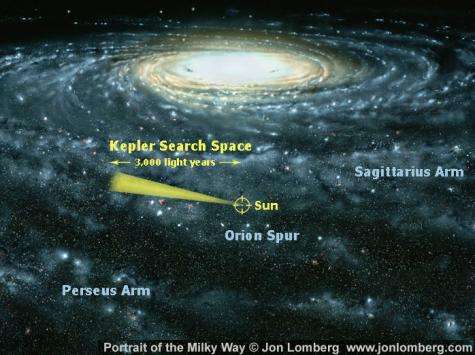
The Extrasolar Planets Encyclopedia counted 548 confirmed extrasolar planets at 6 May 2011, while the NASA Star and Exoplanet Database (updated weekly) was today reporting 535. These are confirmed findings and the counts will significantly increase as more candidate exoplanets are assessed. For example, there were the 1,235 candidates announced by the Kepler mission in February, including 54 that may be in a habitable zone.
So what techniques are brought to bear to come up with these findings?
Pulsar timing – A pulsar is a neutron star with a polar jet roughly aligned with Earth. As the star spins and a jet comes into the line of sight of Earth, we detect an extremely regular pulse of light. Indeed, it is so regular that a slight wobble in the star’s motion, due to it possessing planets, is detectable.
The first extrasolar planets (i.e. exoplanets) were found in this way, actually three of them, around the pulsar PSR B1257+12 in 1992. Of course, this technique is only useful for finding planets around pulsars, none of which could be considered habitable – at least by current definitions – and, in all, only 4 such pulsar planets have been confirmed to date.
To look for planets around main sequence stars, we have...
The radial velocity method – This is similar in principle to detection via pulsar timing anomalies, where a planet or planets shift their star back and forth as they orbit, causing tiny changes in the star’s velocity relative to the Earth. These changes are generally measured as shifts in a star’s spectral lines, detectable via Doppler spectrometry, although detection through astrometry (direct detection of minute shifts in a star’s position in the sky) is also possible.
To date, the radial velocity method has been the most productive method for exoplanet detection (finding 500 of the 548), although it most frequently picks up massive planets in close stellar orbits (i.e. hot Jupiters) – and as a consequence these planets are over-represented in the current confirmed exoplanet population. Also, in isolation, the method is only effective up to about 160 light years from Earth – and only gives you the minimum mass, not the size, of the exoplanet.
To determine a planet’s size, you can use…
The transit method – The transit method is effective at both detecting exoplanets and determining their diameter – although it has a high rate of false positives. A star with a transiting planet, which partially blocks its light, is by definition a variable star. However, there are many different reasons why a star may be variable – many of which do not involve a transiting planet.
For this reason, the radial velocity method is often used to confirm a transit method finding. Thus, although 128 planets are attributed to the transit method – these are also part of the 500 counted for the radial velocity method. The radial velocity method gives you the planet’s mass – and the transit method gives you its size (diameter) – and with both these measures you can get the planet’s density. The planet’s orbital period (by either method) also gives you the distance of the exoplanet from its star, by Kepler’s (that is Johannes’) Third Law. And this is how we can determine whether a planet is in a star’s habitable zone.
It is also possible, from consideration of tiny variations in transit periodicity (i.e regularity) and the duration of transit, to identify additional smaller planets (in fact 8 have been found via this method, or 12 if you include pulsar timing detections). With increased sensitivity in the future, it may also be possible to identify exomoons in this way.
The transit method can also allow a spectroscopic analysis of a planet’s atmosphere. So, a key goal here is to find an Earth analogue in a habitable zone, then examine its atmosphere and monitor its electromagnetic broadcasts – in other words, scan for life signs.
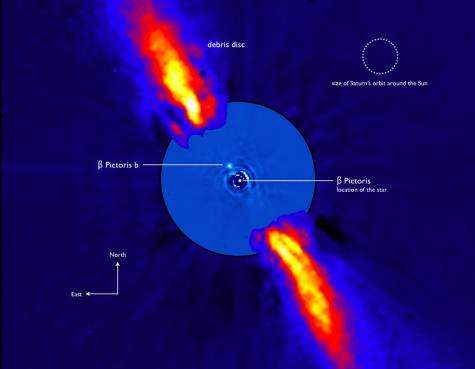
To find planets in wider orbits, you could try...
Direct imaging – This is challenging since a planet is a faint light source near a very bright light source (the star). Nonetheless, 24 have been found this way so far. Nulling interferometry, where the starlight from two observations is effectively cancelled out through destructive interference, is an effective way to detect any fainter light sources normally hidden by the star’s light.
Gravitational lensing – A star can create a narrow gravitational lens and hence magnify a distant light source – and if a planet around that star is in just the right position to slightly skew this lensing effect, it can make its presence known. Such an event is relatively rare – and then has to be confirmed through repeated observations. Nonetheless, this method has detected 12 so far, which include smaller planets in wide orbits such as OGLE-2005-BLG-390Lb.
These current techniques are not expected to deliver a complete census of all planets within current observational boundaries, but do offer us an impression of how many there may be out there. It has been speculatively estimated from the scant data available so far, that there may be 50 billion planets within our galaxy. However, a number of definitional issues remain to be fully thought through, such as where you draw the line between a planet versus a brown dwarf. The Extrasolar Planets Encyclopedia currently set the limit at 20 Jupiter masses.
Anyhow, 548 confirmed exoplanets for only 19 years of planet spotting is not bad going. And the search continues.
Source: Universe Today


