Cell viscosity research improves our knowledge of cancer cells
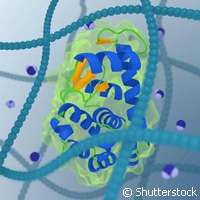
EU-funded researchers from Germany and Poland have made some groundbreaking discoveries about cell cytoplasm viscosity, which could further our knowledge of the cytoplasm of cancer cells.
Led by researchers from the Institute of Physical Chemistry of the Polish Academy of Sciences (IPC PAS), the team was supported in part by an Innovative Economy grant from the European Regional Development Fund (ERDF).
Viscosity is a measure of a fluid's resistance or thickness. The less viscous the fluid is, the greater the fluidity or ease of movement there is within it. Water, for example, has a low viscosity, while honey, being altogether thicker and gloopier, has a higher viscosity.
It was Albert Einstein who first addressed the viscosity of complex fluids in 1906, and since then much research has been carried out into cell cytoplasm viscosity.
Over the years, a body of evidence has been built up, indicating that despite a high cytoplasm viscosity (resulting in theoretically low ease of movement within the cytoplasm), the mobility of small proteins in the cytoplasm is in fact very high - several magnitudes higher than Einstein's formula indicated.
In their study, published in the journal Nano Letters, the team investigates how small protein molecules almost do not experience this cytoplasm viscosity while moving around in the cell. They describe the changes in viscosity as measured in various solutions and experienced by probes, varying in size from a nano to a macro scale.
"We improved our earlier formulae and conclusions to successfully apply them to a larger number of systems, including the first description of the cytoplasm viscosity in cancer cells," comments Professor Robert Holyst from the IPC PAS.
The team were able to describe the viscosity changes using one phenomenological formula containing coefficients of the same physical nature. The coefficients give a description for both the fluid medium (filled with a network of long-chained polymers or clusters of molecules, for example) and what kind of probe (e.g. a protein molecule) is moving in the medium.
The new formula can then be used for probes from a fraction of nanometre up to several centimetres in size.
The relationships found were generally valid for various types of fluids including solutions with an elastic microscopic structure (e.g. polymer networks in various solvents) and microscopically rigid systems (e.g. composed of elongated aggregates of molecules - micelles).
The team also applied these new formulae to describe the mobility of DNA fragments and other probes in mouse muscle cells as well as human cancer cells "We managed to show that the fluid viscosity in the cell depends actually not only on the intracellular structure but also on the size of the probe used in viscosity measurement,' says Tomasz Kalwarczyk, a PhD student from the IPC PAS. 'Our research resulted in a novel method to characterise cell structure - by measuring the viscosity of the cytoplasm."
The implications of this research are far reaching. Scientists can now better estimate the migration time of drugs introduced in cells, and this knowledge can also be applied to nanotechnologies, for example in the fabrication of nanoparticles with micellar solutions.
The findings of the study will also have an impact on advanced measurement methods such as dynamic light scattering, which allows suspensions of molecules to be analyzed by size.
More information: Kalwarczyk, T., (2011) Comparative Analysis of Viscosity of Complex Liquids and Cytoplasm of Mammalian Cells at the Nanoscale. Nano Lett. 11, 2157-2163. DOI:10.1021/nl2008218
Provided by CORDIS
-
From lemons to lemonade: Reaction uses carbon dioxide to make carbon-based semiconductor,
32 comments
-
Thioridazine kills cancer stem cells in human while avoiding toxic side-effects of conventional cancer treatments,
3 comments
-
SpaceX private rocket blasts off for space station (Update),
42 comments
-
Climate scientists say they have solved riddle of rising sea,
31 comments
-
SpaceX capsule has 'new car' smell, astronauts say (Update),
2 comments
-
What would stain as translucent on light-coloured fabric?
14 hours ago
-
How do I identify different bacteria on culture plates?
May 26, 2012
-
Why Do Dogs do Strange things...
May 25, 2012
-
What does exophillic and endophillic mean in terms of mosquito and their control?
May 24, 2012
-
Semen stains glows under black lights (uv light)?
May 23, 2012
-
Question on Human Chromosome 2
May 23, 2012
- More from Physics Forums - Biology
More news stories
In nanorod crystal growth, nanoparticles seen as artificial atoms
In the growth of crystals, do nanoparticles act as "artificial atoms" forming molecular-type building blocks that can assemble into complex structures? This is the contention of a major but controversial theory ...
May 24, 2012 |
4.8 / 5 (6) |
0
|
First direct observation of oriented attachment in nanocrystal growth
Berkeley Lab researchers have reported the first direct observation of nanoparticles undergoing oriented attachment, the critical step in biomineralization and the growth of nanocrystals. A better understanding ...
May 24, 2012 |
4.7 / 5 (3) |
0
|
Dopant gives graphene solar cells highest efficiency yet
(Phys.org) -- By taking advantage of graphenes favorable electrical and optical properties, and then adding an organic dopant, researchers have achieved the highest power conversion efficiency yet for ...
Synthetic nano-waste does not disappear
(Phys.org) -- Tiny particles of cerium oxide do not burn or change in the heat of a waste incineration plant. They remain intact on combustion residues or in the incineration system, as a new study by Swiss ...
Nanotechnology / Bio & Medicine
May 25, 2012 |
5 / 5 (2) |
1
|
'Metamaterials,' quantum dots show promise for new technologies
(Phys.org) -- Researchers are edging toward the creation of new optical technologies using "nanostructured metamaterials" capable of ultra-efficient transmission of light, with potential applications including ...
May 24, 2012 |
5 / 5 (7) |
1
|
Nvidia trumpets Tegra 3 phone design wins for 2012
(Phys.org) -- Nvidias competitive war paint has a name, Tegra 3. On the heels of Nvidia announcements about lowering costs of its Tegra 3 processors and Nvidia-enabled tablets running Android Ice Cream ...
Browser wars flare in mobile space
The browser wars are heating up again, but this time the fight is for dominance of the mobile Internet.
Scientist: Evolution debate will soon be history
(AP) -- Richard Leakey predicts skepticism over evolution will soon be history. Not that the avowed atheist has any doubts himself.
Dell tablet leak: 10.1-inch display, two-battery choice
(Phys.org) -- Headline after headline talks about vendors tablets in the wings as likely number-one contenders for the iPad. Such claims have justifiably been taken with a grain of salt, considering ...
SpotterRF debuts Radar Backpack Kit (w/ Video)
(Phys.org) -- SpotterRF has announced a special radar backpack kit designed to enhance situational awareness for soldiers on the ground. The company says its special radar is designed for warfighters as part ...
SpaceX capsule has 'new car' smell, astronauts say (Update)
SpaceX's Dragon cargo vessel smells like a new car, said astronauts at the International Space Station after opening the hatches Saturday following the spacecraft's landmark mission to the orbiting lab.