Student-developed eye-tracking tablet to help people with disabilities
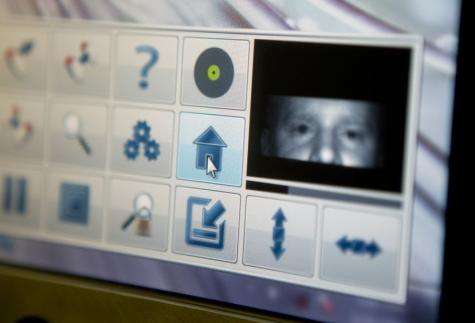
(PhysOrg.com) -- It's often said the eye is the window to the soul. But in this case, the eye is the window to Windows. At least, that was the goal when EyeTech Digital Systems enlisted the help of some BYU engineering students in creating an all-in-one eye-tracking system.
The idea behind the project was to create an inexpensive computer system that could be controlled completely with a person’s eyes. The hope was that this system could be used by people with disabilities in parts of the world where they can’t afford expensive eye-tracking systems.
The students created the tablet for their yearlong engineering capstone project that has students solving real engineering problems with real clients. Their client was EyeTech Digital Systems, an Arizona-based company that designs and develops eye-tracking hardware and software.
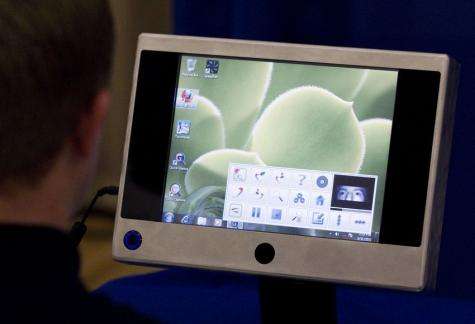
A separate BYU engineering team also worked with EyeTech last year to develop and improve the initial eye-tracking technology, but the focus of this year’s project was to integrate the eye tracking into a housing that resembles a thick tablet PC.
“They had a lot to learn about how to put together a PC, but the final result speaks for itself,” said Robert Chappell, the CEO of EyeTech. “We’ve worked with the engineering capstones two years in a row now, and I noticed the same thing both years: the teams always come up with a lot of creative, sometimes crazy ideas at the beginning, but after three or four months they know what they need to do, and they implement it very well.”
The finished product has a touch screen, runs Windows 7 and has the eye-tracking system built in — not bad for a device that’s only 2 inches thick, 10 inches long and 14 inches wide.
After performing a quick calibration, the system can move the mouse to wherever the user is currently looking. The system can run everything from Solitaire to Skype, and all it takes is a blink to click.
Systems with similar capabilities can cost upwards of $14,000 — the eye tracker itself can cost several thousand dollars. But the students were able to find cheaper, readily available parts, pushing the cost down to under $1,500.
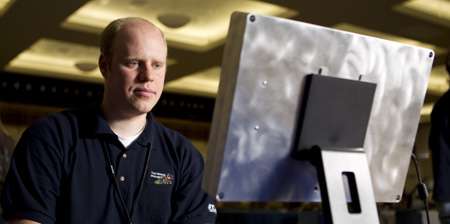
Jedediah Nieveen, the captain for this year’s team, said the project was a challenge, but one that was rewarding on many levels.
“A lot of times in school you just work problems out of books,” he said. “But this allowed us to take what we learned and apply it to something in real life, something that can help a lot of people, and that’s really helped me.”
Although the primary purpose of the product is to help people with disabilities, the technology could also have broader applications in the fields of research, advertising and possibly even gaming.
Greg Bishop, an adjunct professor of mechanical engineering, is the team's faculty coach. Nieveen, Nathan Christensen, Clint Collins, Bryan Johnson, Vicky Lee and Scott Rice were the students involved in the project.
Provided by Brigham Young University


