States seek to make it safer to find love online
(AP) -- Something just didn't seem right when Ilana Angel met her Internet date at a bar. He furtively looked around the room and immediately suggested they go someplace else in his car, leaving hers behind at the bar.
Aware of the risks of that come with looking for love online, Angel thought better of the suggestion and said no.
"People are shady," said Angel, who writes a blog in Los Angeles about dating and being over 40. "You just have to be aware and you have to be careful."
Amid accounts of sex offenders using matchmaking sites to find victims, lawmakers in several states are trying to pass legislation to help make online daters more aware of the potential pitfalls of the process. Bills are pending this year in Connecticut and Texas to provide users with more information to protect themselves.
Connecticut's bill, mirroring a law in New York, requires Internet dating services to provide a safety awareness notice during registration that offers advice such as never including your last name, email address, place of work, phone numbers or identifying information in an Internet profile. Similar laws are already on the books in Florida and New Jersey.
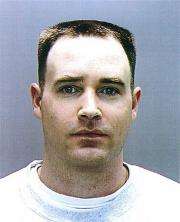
A Pennsylvania man, Jeffrey Marsalis, was sentenced in 2009 to life in prison in Idaho for sexually assaulting a woman in 2005. He was already serving a 21-year sentence in Pennsylvania for two other sexual assault convictions. Authorities in Philadelphia portrayed Marsalis as a smooth talker who would meet women on the popular dating website Match.com, telling them he was an astronaut, doctor or a spy and then slip something into their drinks to incapacitate them.
"I've heard a lot of stories, not only people who had their physical safety endangered, but also financial safety," said Connecticut state Rep. Mae Flexer, a Democrat who authored the bill. "I've heard from a number of people who unfortunately met someone online, they gave them too much information and were damaged financially as well."
The Texas legislation requires online dating services to clearly disclose to customers whether they conduct criminal background checks on each member before allowing them to contact other members on the site. The same bill requires the sites to remind customers that background checks are not a perfect safety solution and they can be circumvented by criminals.
New York lawmakers are considering a similar bill that would supplement last year's law. It would also require the companies to clearly notify users whether they conduct criminal background screenings.
Match.com said Sunday that it will begin screening its users against the national sex offender registry. The announcement came after a California woman sued the site, saying she was sexually assaulted while on a second date by a man she met on Match.com. She has claimed the assault could have been prevented with a proper background check.
A spokesman for Match.com said the company was already considering screening its users before the woman's lawsuit was filed. He said the timing of the decision was accelerated by the attention brought by the suit.
Donna Rice Hughes, CEO and president of Enough is Enough, a Virginia- based nonprofit that focuses on improving Internet safety for children and families, said it makes sense for corporate matchmaking websites to proactively take steps to make their services safer. She recalled how social networking sites used by many young people convened a task force in 2008, along with state attorneys general, and came up with ways to try and block access to sexual predators.
In 2009, MySpace announced how 90,000 sex offenders had been identified and removed from the social networking site.
"A good corporate leader needs to do that," said Rice Hughes, referring to proactive efforts to beef up safety measures. "The last thing they need for business is for somebody to get harmed by something through their site. ... They should be running their database against the sex offender registries. That's a no-brainer."
Alex Vasquez, founder of the L.A.-based blog theurbandater.com, said not everyone in the online dating community likes the idea of background checks.
"It's definitely going to be a hot-button item because there's definitely that privacy issue," he said.
Vasquez recommends both women and men use common sense when meeting their online dates face-to-face. He said he's had some sketchy Internet dating experiences. In one instance, a woman lied about her background and wound up being about ten years older than she had portrayed herself, living in a rundown motel and essentially on the run from an abusive husband. She was still wearing her wedding ring when she met Vasquez.
"What if the guy had come out and decided to do something bad to me?" he said. "There's no guarantees. As convenient as online dating has become, there are still issues with safety. ... People just assume that it's safe."
Angel, a divorced mother who sometimes goes on two or three dates each week, writes the Keeping the Faith blog at jewishjournal.com.
Despite the risks of online dating, she said she has few other options to finding true love.
"Dating is disgusting. It's disgusting and online dating is brutal," said Angel. "But I want to have a partner. I want to have a witness to the second half of my life."
©2010 The Associated Press. All rights reserved. This material may not be published, broadcast, rewritten or redistributed.


