How do you manage US oceans? Look at local successes
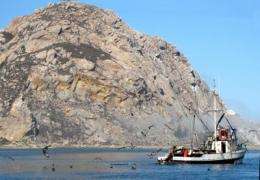
Policymakers are very familiar with land-use planning. But what is the best approach for planning uses of America's coastal waters and oceans? That question has gained importance since President Obama formed the National Ocean Council last summer and charged it with developing an ecosystem-based stewardship policy for the nation's oceans, coastal waters and the Great Lakes.
A team of natural and social scientists led by Brown University offers some guidance. Published in the scientific journal Conservation Letters, the team's paper offers policy recommendations based on a two-year investigation of marine protection efforts by more than two-dozen local and regional projects from California to Maine. The authors find no group has a one-size-fits-all solution to managing a marine or freshwater area. But they write that many have come up with individual practices that, when combined, could help create an effective national ocean-management policy.
"Every project is engaged in some new and effective ecosystem-based practices, but none of them is doing them all," said Leila Sievanen, a postdoctoral researcher in the Center for Environmental Studies at Brown University and the paper's lead author. "Together, though, they are demonstrating what could work on the national level."
In July, Obama established the National Ocean Policy. The executive order stipulates "for the first time a comprehensive, integrated national policy for the stewardship of the ocean, our coasts and Great Lakes, which sets our nation on a path toward comprehensive planning for the preservation and sustainable uses of these bodies of water," according to the White House. The National Ocean Council, the body created to carry out the order, is expected to release a series of draft strategic action plans this summer.
The paper's authors, which include Heather Leslie, an expert on marine ecosystem-based management at Brown, report several practices that they have observed to be successful in the field. They say including these elements in ocean planning will help bridge the gap between government regulations and grassroots efforts.
"Many of the best practices we've observed come from local groups," Leslie said. "We expect that as the National Ocean Policy moves forward, these local efforts will continue to serve as a model for how to more proactively manage America's oceans."
Recommendations and success stories
Recommendation:
Involve all stakeholders, from the scientists to the fishermen, in the effort.
Authors' note: "While these collaborations are not instant solutions to tensions between fishing communities, scientists, and managers, the extent to which those affected by decisions participate in the generation of knowledge and decision-making processes can help to develop trust among these actors and to strengthen legitimacy of the process and increase compliance, particularly if those affected see new rules as reasonable within the local context."
Where it works: Morro Bay (California) and Northwest Straits (Washington state)
Recommendation:
Set the objectives as early as possible.
Authors' note: "Incorporating a range of interests early can ensure that conservation priorities set at higher levels are not at odds with local priorities and pre-existing initiatives."
Where it works: Marine protected areas in California
Recommendation:
Create an institutional structure where all facets of the issue can be "nested."
Authors' note: "While ocean ecosystems operate at multiple scales, human activities, like fisheries and energy development, are often managed at a single, geographically broad scale."
Where it works: Morro Bay (California), Port Orford (Oregon), Gulf of Maine Council
Recommendation:
Provide funding.
Authors' note: "The provision of top-down incentives in the form of funding for ecosystem-scale activities can motivate organizations and individuals to take action."
Where it works: Morro Bay (California)
Recommendation:
Find a hook to galvanize action.
Authors' note: "Building on a sense of crisis or a shared commitment to a specific place was often powerful."
Where it works: Port Orford (Oregon), Gulf of Maine Council, San Juan Islands (Washington state), Gulf of Mexico
Recommendation:
Avoid duplicative entities and efforts.
Authors' note: "The issue of organizational fatigue and overlap is not trivial, and decision makers will need to confront it as the regional planning bodies form."
Where it works: Morro Bay (California), Puget Sound Partnership, Gulf of Maine Council
Provided by Brown University


