New transcription factor reveals molecular mechanism for wound-induced organ regeneration
March 11, 2011

New transcription factor reveals molecular mechanism for wound-induced organ regeneration

Enlarge

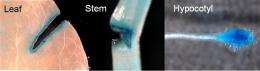
Fig. 1: WIND1 gene expression induced at wound site. Credit: RIKEN

Japanese researchers at the RIKEN Plant Science Center (PSC) and the National Institute of Advanced Industrial Science and Technology (AIST) have identified a novel transcription factor controlling how plants dedifferentiate cells in response to wounding.

The finding sheds first-ever light on the molecular-level mechanisms of plant cell dedifferentiation, offering fundamental insights on wound-induced organ regeneration and promising applications in agriculture and manufacturing.

One of the most remarkable properties of plants is their capacity to regenerate tissue structures and even whole organs to replace those damaged or lost through injury. Plants are able to do this thanks to high-level dedifferentiation, a process whereby withdraw from their specialized state and acquire proliferation ability and , enabling them to develop anew into different cell types. While the knowledge and use of techniques for plant organ regeneration has a long history in horticulture, little is known about the underlying dedifferentiation.

New transcription factor reveals molecular mechanism for wound-induced organ regeneration
Enlarge

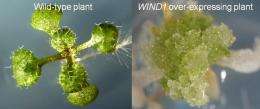
Fig. 2: Overexpression of WIND1 gene is sufficient for cell dedifferentiation. Credit: RIKEN

To clarify these mechanisms, the researchers studied a common type of cell dedifferentiation induced by wounding, where its role in tissue and organ regeneration is critical to survival. In plants, this regeneration frequently occurs through the creation of masses of cells known as callus, which grow over the wound to protect it. Using data from earlier research, the researchers identified a gene in the model that is upregulated in callus. Further investigation revealed that the gene is rapidly expressed at the wound site and throughout the development of the callus, pointing to a potential role in wound-induced dedifferentiation.

Through a series of experiments, the researchers went on to analyze the function of this gene and the transcription factor it encodes, referred to as WOUND INDUCED DEDIFFERENTIATION 1 (WIND1). Elevated expression of the WIND1 gene in wounds, and formation of callus in response to WIND1 activation, reveal its role as a master regulator for wound-induced dedifferentiation in plants.
New transcription factor reveals molecular mechanism for wound-induced organ regeneration
Enlarge

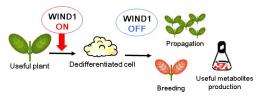
Fig. 3: WIND1 can be used as a molecular switch for plant dedifferentiation / redifferentiation. Credit: RIKEN

Together, the findings establish a mechanism for transcriptional control of cell dedifferentiation underlying wound-induced . While laying the groundwork for fundamental advances in plant science, the research also opens the door to applications in agricultural technology as well as in the production of useful materials.

More information: Iwase et al., The AP2/ERF Transcription Factor WIND1 Controls Cell Dedifferentiation in Arabidopsis, Current Biology (2011), doi:10.1016/j.cub.2011.02.020

Provided by RIKEN search and more info website


Rank 5 /5 (1 vote)
Relevant PhysicsForums posts
  • Potential Breakthrough in Seizure Control
    created23 hours ago
  • Popping/Cracked sternum.
    createdMay 25, 2012
  • Which Mental Illness Encompasses This Problem?
    createdMay 25, 2012
  • A question about drug tolerance
    createdMay 23, 2012
  • Poor nutrition leading to overeating?
    createdMay 23, 2012
  • Math and dyslexia?
    createdMay 21, 2012
  • More from Physics Forums - Medical Sciences

More news stories

Keep food safety in mind this memorial day weekend

(HealthDay) -- Picnics, parades and cookouts are as much a part of Memorial Day weekend as tributes to the United States' war veterans.

Medicine & Health / Health

created 8 hours ago | popularity not rated yet | comments 0

Family history of Alzheimer's affects functional connectivity

(HealthDay) -- Cognitively normal individuals with a family history of late-onset Alzheimer's disease (AD) may display lower resting state functional connectivity in the default mode network (DMN) of the brain, ...

Medicine & Health / Alzheimer's disease & dementia

created 17 hours ago | popularity not rated yet | comments 0

Transvaginal mesh op restores pelvic organ prolapse at price

(HealthDay) -- Transvaginal mesh (TVM) procedures are effective for anatomical restoration of pelvic organ prolapse (POP), but patients report a worsening of sexual function following surgery, according to ...

Medicine & Health / Other

created 18 hours ago | popularity not rated yet | comments 0

Travel to high altitudes tied to Crohn's, colitis flare-ups

(HealthDay) -- People with inflammatory bowel disease, which includes Crohn's disease and colitis, may be at increased risk for flare-ups when they fly or travel to high altitudes for skiing or mountain climbing, ...

Medicine & Health / Inflammatory disorders

created 18 hours ago | popularity not rated yet | comments 1 | with audio podcast

Weight struggles? Blame new neurons in your hypothalamus

New nerve cells formed in a select part of the brain could hold considerable sway over how much you eat and consequently weigh, new animal research by Johns Hopkins scientists suggests in a study published in the May issue ...

Medicine & Health / Neuroscience

created May 21, 2012 | popularity 5 / 5 (1) | comments 6 | with audio podcast


Scientist: Evolution debate will soon be history

(AP) -- Richard Leakey predicts skepticism over evolution will soon be history. Not that the avowed atheist has any doubts himself.

Dell tablet leak: 10.1-inch display, two-battery choice

(Phys.org) -- Headline after headline talks about vendors’ tablets in the wings as likely number-one contenders for the iPad. Such claims have justifiably been taken with a grain of salt, considering ...

SpotterRF debuts Radar Backpack Kit (w/ Video)

(Phys.org) -- SpotterRF has announced a special radar backpack kit designed to enhance situational awareness for soldiers on the ground. The company says its special radar is designed for warfighters as part ...

SpaceX capsule has 'new car' smell, astronauts say (Update)

SpaceX's Dragon cargo vessel smells like a new car, said astronauts at the International Space Station after opening the hatches Saturday following the spacecraft's landmark mission to the orbiting lab.

Thousands of shellfish found dead in Peru

Thousands of crustaceans were found dead off the coast of Lima following the mystery mass death of dolphins and pelicans, the Peruvian Navy said Friday.

Astronomers seize last chance in lifetime for Venus Transit

Astronomers are gearing for one the rarest events in the Solar System: an alignment of Earth, Venus and the Sun that will not be seen for another 105 years.