European coastal pollution is harmful to seals
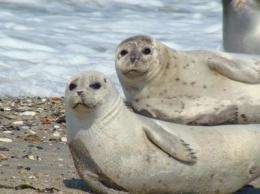
The bodies of harbour seals (Phoca vitulina), which live in estuaries or along coastlines where industrial activities take place, are highly contaminated. This is the result of a European study, involving Spanish participation, which warns of the danger to these mammals from ports throughout Europe, even in the Mediterranean.
"Although there are no seals in Spanish waters, these species can be used as biomonitors of global pollution", Octavio Pérez Luzardo, one of the authors of the study published recently in Marine Pollution Bulletin, and a researcher in the Environment and Health Research Group at the University of Las Palmas de Gran Canaria, tells SINC.
The group discovered that a population of harbour seals (Phoca vitulina) from the estuary of the Elbe river (Germany) is exposed to higher levels of contamination than other animals living at a certain distance from the coast. Industrial activities, dredging and shipping have made this river one of the largest sources of pollution in the German waters of the North Sea.
"What is happening to the seals is happening to all the other species that share their ecosystem", says Pérez Luzardo. The expert says that, "this kind of study, repeated periodically, is important because it makes it possible to monitor the effectiveness of policies put in place to prevent chemical contamination".
There is a large seal community throughout the whole of Europe in Scotland, the Scandinavian countries and the Mediterranean, where the Monk seal (Monachus monachus) lives. There are "also small populations of this seal in the Atlantic (Madeira), and it is at serious risk of extinction", the researcher warns.
High levels of heavy metals
In order to carry out the study, the experts measured the levels of 17 persistent pesticides, "many of which were banned more than 30 years ago, but which are still present because they are so resistant to being broken down". The researchers also analysed 19 types of polychlorinated biphenyls, which are considered to be the most toxic chemical compounds because of their similarity to dioxins (carcinogenic compounds).
These mammals show up high levels of various metals and organochloride pollutants from the Elbe river. The seals also display higher levels of gamma globulins and antibodies (measurements of immunity) than other animals that do not live in the estuary, which suggests that there are a high amount of disease-causing agents (pathogens) in this area.
Heavy metals are natural elements that do not break down. "Humans extract them from mines, where they are immobile, concentrate them and release them into the environment", explains Pérez Luzardo.
The study was carried out on five seals, because they are "adult wild animals that are very difficult to catch without harming them in any way", the researcher adds. He is currently working on another project involving a larger sample of 36 animals.
The researchers are currently analysing how this kind of pollution affects human beings and animal species such as sea turtles from the Canary Islands and Cape Verde.
More information: Antje Kakuschke, Elizabeth Valentine-Thon, Simone Griesel, Juergen Gandrass, Octavio Perez Luzardo, Luis Dominguez Boada, Manuel Zumbado Peña, Maira Almeida González, Mechthild Grebe, Daniel Pröfrock, Hans-Burkhard Erbsloeh, Katharina Kramer, Sonja Fonfara y Andreas Prange. "First health and pollution study on harbor seals (Phoca vitulina) living in the German Elbe estuary". Marine Pollution Bulletin. 60(11), Nov 2010. Doi:10.1016/j.marpolbul.2010.07.011
Provided by FECYT - Spanish Foundation for Science and Technology


