Athletes recover more quickly with carbohydrates
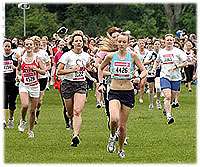
Researchers at the University of Bath report that the best way for athletes to recover after exercise is to eat a small amount of carbohydrate regularly.
Dr. James Betts, from the Human Physiology Research Group within the Universitys Department for Health, reviewed evidence on post-exercise nutrition to find out which nutrients are most important for recovery and why.
He focused on the role of dietary carbohydrates for effective recovery from sports ranging from running to cycling to resistance exercise, which all point towards the importance of foods or supplements which rapidly increase blood sugar levels, which should be consumed as soon as possible after exercise.
But far less is known about how athletes should continue their eating strategy later into recovery.
Dr. Betts review showed that feeding at 1530 minutes intervals may help the body to recover more quickly than if the same foods are ingested less frequently.
He also found that a small amount of protein can offer some added benefits for recovery, partly because it increases the insulin response to feeding and therefore alters how the body handles the ingested carbohydrate.
Dr. Betts said: Many athletes are required to train or compete on more than one occasion within a single day and so need to maximise their recovery with a limited time.
The results of our review show that the best nutritional strategy to adopt during exercise involves ingestion of carbohydrate without added protein. However, it appears that nutritional requirements may differ after exercise because including a small amount of protein can be beneficial for recovery, particularly if carbohydrate has been ingested at below the recommended amount.
The summary of studies shown in the review indicates that for every hour of recovery athletes should aim to ingest one gram of carbohydrate per kilogram of lean body mass in order to maximise recovery.
Dr. Betts added: This recommendation is therefore easily calculated, with a 70 kg (154 lbs) runner ingesting just under 300g (11 oz) of carbohydrate over the first four hours after exercise, but is less easily consumed in practice given the large volume prescribed. If rapid recovery is therefore a focus during intensified training, my advice would be simply to ingest a high carbohydrate diet and be aware that the quantities your muscles require are likely to exceed your desire to eat them.
Provided by
University of Bath
-
From lemons to lemonade: Reaction uses carbon dioxide to make carbon-based semiconductor,
30 comments
-
Thioridazine kills cancer stem cells in human while avoiding toxic side-effects of conventional cancer treatments,
3 comments
-
SpaceX private rocket blasts off for space station (Update),
42 comments
-
Climate scientists say they have solved riddle of rising sea,
30 comments
-
Research team claims to have found evidence Lake Cheko is impact crater for Tunguska Event,
18 comments
-
Classical and Quantum Mechanics via Lie algebras
Apr 15, 2011
- More from Physics Forums - Independent Research
More news stories
Keep food safety in mind this memorial day weekend
(HealthDay) -- Picnics, parades and cookouts are as much a part of Memorial Day weekend as tributes to the United States' war veterans.
2 hours ago |
not rated yet |
0
Family history of Alzheimer's affects functional connectivity
(HealthDay) -- Cognitively normal individuals with a family history of late-onset Alzheimer's disease (AD) may display lower resting state functional connectivity in the default mode network (DMN) of the brain, ...
Medicine & Health / Alzheimer's disease & dementia
11 hours ago |
not rated yet |
0
Transvaginal mesh op restores pelvic organ prolapse at price
(HealthDay) -- Transvaginal mesh (TVM) procedures are effective for anatomical restoration of pelvic organ prolapse (POP), but patients report a worsening of sexual function following surgery, according to ...
11 hours ago |
not rated yet |
0
Travel to high altitudes tied to Crohn's, colitis flare-ups
(HealthDay) -- People with inflammatory bowel disease, which includes Crohn's disease and colitis, may be at increased risk for flare-ups when they fly or travel to high altitudes for skiing or mountain climbing, ...
Medicine & Health / Inflammatory disorders
12 hours ago |
not rated yet |
1
|
Of mice and mental models: Neuroscientific implications of risk-optimized behavior in the mouse
(Medical Xpress) -- Regardless of an organism’s biological complexity, every encephalized animal continuously makes under-informed behavioral choices that can have serious consequences. Despite its ubiquity, ...
Dell tablet leak: 10.1-inch display, two-battery choice
(Phys.org) -- Headline after headline talks about vendors tablets in the wings as likely number-one contenders for the iPad. Such claims have justifiably been taken with a grain of salt, considering ...
Scientist: Evolution debate will soon be history
(AP) -- Richard Leakey predicts skepticism over evolution will soon be history. Not that the avowed atheist has any doubts himself.
SpaceX capsule has 'new car' smell, astronauts say (Update)
SpaceX's Dragon cargo vessel smells like a new car, said astronauts at the International Space Station after opening the hatches Saturday following the spacecraft's landmark mission to the orbiting lab.
SpotterRF debuts Radar Backpack Kit (w/ Video)
(Phys.org) -- SpotterRF has announced a special radar backpack kit designed to enhance situational awareness for soldiers on the ground. The company says its special radar is designed for warfighters as part ...
Australia hails surprise super-telescope decision
Australia has hailed a surprise decision giving it a role in a radio telescope project aimed at revolutionising astronomy, vowing to draw on its decades of experience in space science.
Thousands of shellfish found dead in Peru
Thousands of crustaceans were found dead off the coast of Lima following the mystery mass death of dolphins and pelicans, the Peruvian Navy said Friday.