Expecting the best, fearing the worst with placebo effect
(PhysOrg.com) -- Poor expectations of treatment can override all the effect of a potent pain-relieving drug, a brain imaging study at Oxford University has shown.
In contrast, positive expectations of treatment doubled the natural physiological or biochemical effect of the opioid drug among the healthy volunteers in the study.
The study of the placebo effect – and its opposite the nocebo effect – is published in Science Translational Medicine. The findings suggest that doctors may need to consider dealing with patients’ beliefs about the effectiveness of any treatment, as well as determining which drug might be the best for that patient.
"Doctors shouldn’t underestimate the significant influence that patients' negative expectations can have on outcome," says Professor Irene Tracey of the Center for Functional Magnetic Resonance Imaging of the Brain at Oxford University, who led the research.
"For example, people with chronic pain will often have seen many doctors and tried many drugs that haven’t worked for them. They come to see the clinician with all this negative experience, not expecting to receive anything that will work for them. Doctors have almost got to work on that first before any drug will have an effect on their pain."
The placebo effect describes the improvements seen when patients – unknowingly – are given dummy pills or sham treatments but believe it will do them good. This is a very real physiological effect; it is not just about patients ‘feeling’ better. The nocebo effect is the opposite: patients see poorer outcomes as the result of doubts about a medical treatment.
Previous studies have investigated the basis of the placebo effect, when using sugar pills or saline injections for example, and confirmed it can elicit a real response.
This new research, funded by the Medical Research Council and German research funders, goes a step further by examining how manipulating participants’ expectations can influence their response to an active drug.
The Oxford University team, along with colleagues from the University Medical Center Hamburg-Eppendorf in Germany, Cambridge University, and the Technische Universität München, set out to investigate these effects among 22 healthy adult volunteers by giving them an opioid drug and manipulating their expectations of the pain relief they might receive at different points.
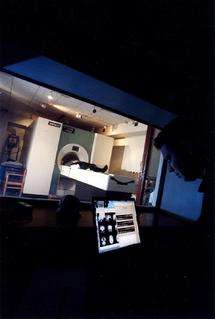
The volunteers were placed in an MRI scanner and heat applied to the leg at a level where it begins to hurt – set so that each individual rated the pain at 70 on a scale of 1 to 100. An intravenous line for administration of a potent opioid drug for pain relief was also introduced.
After an initial control run, unknown to the participants, the team started giving the drug to see what effects there would be in the absence of any knowledge or expectation of treatment. The average initial pain rating of 66 went down to 55.
The volunteers were then told that the drug would start being administered, although no change was actually made and they continued receiving the opioid at the same dose. The average pain ratings dropped further to 39.
Finally, the volunteers were led to believe the drug had been stopped and cautioned that there may be a possible increase in pain. Again, the drug was still being administered in the same way with no change. Their pain intensity increased to 64. That is, the pain was as great as in the absence of any pain relief at the beginning of the experiment.
The researchers used brain imaging to confirm the participants’ reports of pain relief. MRI scans showed that the brain’s pain networks responded to different extents according to the volunteers’ expectations at each stage, and matching their reports of pain.
This showed the volunteers really did experience different levels of pain when their expectations were changed, although the administration of pain relief remained constant.
Professor Tracey notes that these results have been seen in a small, healthy group of volunteers, and that these are short-term, not sustained, manipulations of the participants’ beliefs about the treatment.
But she says it’s important not to underestimate the strength of the effect of such expectations on any treatment, and that clinicians need to know how to manage that.
Professor Tracey says there may also be lessons for the design of clinical trials. These are often carried out comparing a candidate drug against a dummy pill to see if there is any effect of a drug above and beyond that of the placebo.
"We should control for the effect of people’s expectations on the results of any clinical trial. At the very least we should make sure we minimise any negative expectations to make sure we’re not masking true efficacy in a trial drug."
More information: stm.sciencemag.org/content/3/70/70ra14.abstract


