A new model for studying Parkinson's
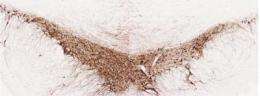
Evidence is steadily mounting that genetic factors play an important role in many cases of Parkinson's disease (PD). In a study published February 2, 2011, online in the Journal of Neuroscience, researchers from the Ecole Polytechnique Fédérale de Lausanne (EPFL) in Switzerland report a new mammalian model for studying a specific gene mutation commonly found in PD sufferers, opening the door to new drugs to fight the malady.
"This is a great step forward toward a more comprehensive understanding of how the disease works, and how it can be diagnosed and treated," explains neuroscientist and EPFL President Patrick Aebischer, lead author of the study.
PD is a common neurodegenerative disease that greatly reduces quality of life and costs the United States around 23 billion dollars a year. Until now, researchers have encountered difficulty in reproducing PD pathology in animals because of an incomplete understanding of the disease.
Recently, a mutation of the gene coding for LRRK2, a large enzyme in the brain, has emerged as the most prevalent genetic cause of PD (genetics are implicated in about 10 percent of all PD cases). When the enzyme is mutated, it becomes hyperactive, causing the death of vulnerable neurons and leading to a reduction in levels of the brain neurotransmistter dopamine. This decrease in dopamine eventually triggers the symptoms characteristic of Parkinson's, such as tremors, instability, impaired movement, and later stage dementia.
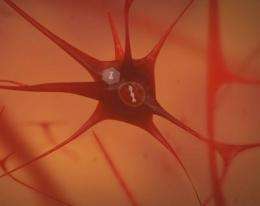
Now, with funding from the Michael J. Fox Foundation for Parkinson's Research, Aebischer and his team in the Neurodegenerative Studies Laboratory at EPFL, have successfully introduced mutant LRRK2 enzyme into one hemisphere of a rat brain, resulting in the same PD manifestations that occur in humans in one side of the rodent's body. To do this, the researchers spent two years producing and optimizing a viral vector to deliver mutated, LRRK2 coding DNA into the rat brain. LRRK2 is a large and complicated enzyme and designing a vector capable of transporting its extremely long genetic code was no small feat.
The new animal model developed by EPFL is sure to benefit future Parkinson's research. The fact that LRRK2 is an enzyme—a catalyzing protein involved in chemical reactions—makes it drug accessible and therefore of specific interest to researchers looking for neuroprotective strategies, or pharmaceutical treatments that halt or slow disease progression by protecting vulnerable neurons. Armed with the LRRK2 model, new pharmaceuticals that inhibit the hyper-activity of the enzyme could one day prevent the destructive chain of events that leads to neurodegeneration and devastation in many with PD.


