Control system developed to allow spacecraft to think for themselves
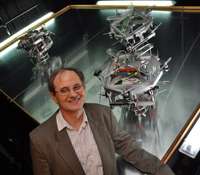
The world’s first control system that will allow engineers to programme autonomous satellites and spacecraft to think for themselves has been developed by scientists from the University of Southampton.
Professor Sandor Veres and his team of engineers have developed a cognitive software agent control system called ‘sysbrain’.
Using natural language programming (NLP), the software agents can read special English language technical documents on control methods. This gives the vehicles advanced guidance, navigation and feedback capabilities to stop them crashing into other objects, agent-based control with mission execution capabilities and the ability to recognise and reconfigure faults.
Professor Veres, who is leading the EPSRC-funded project, says: “This is the world’s first publishing system of technical knowledge for machines and opens the way for engineers to publish control instructions to machines directly. As well as spacecrafts and satellites, this innovative technology is transferable to other types of autonomous vehicles, such as autonomous underwater, ground and aerial vehicles.”
To test the control systems that could be applied in a space environment, Professor Veres and his team constructed a unique test facility and a fleet of satellite models, which are crontrolled by the sysbrain cognitive agent control system.
The ‘Autonomous Sytems Testbed’ consists of a glass covered precision level table, surrounded by a metal framework, which is used to mount overhead visual markers, observation cameras and isolation curtains to prevent any external light sources interfering with experimentation. Visual navigation is performed using onboard cameras to observe the overhead marker system located above the test area. This replicates how spacecraft would use points in the solar system to determine their orientation.
The perfectly-balanced model satellites, which rotate around a pivot point with mechanical properties similar to real satellites, are placed on the table and glide across it on roller bearings almost without friction to mimic the zero-gravity properties of space. Each model has eight propellers to control movement, a set of inertia sensors and additional cameras to be ‘spatially aware’ and to ‘see’ each other. The model’s skeletal robot frame also allows various forms of hardware to be fitted and experimented with.
Professor Veres adds: “We have invented sysbrain to control intelligent machines. Sysbrain is a special breed of software agents with unique features such as natural language programming to create them, human-like reasoning, and most importantly they can read special English language documents in ‘system English’ or ‘sEnglish’. Human authors of sEnglish documents can put them on the web as publications and sysbrain can read them to enhance their physical and problem solving skills. This allows engineers to write technical papers directly for sysbrain that control the machines.”
Provided by University of Southampton


