The genius of bacteria: Scientists develop IQ test to assess and outsmart bacteria's 'social intelligence'
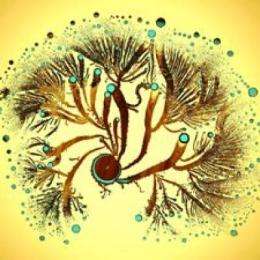
IQ scores are used to assess the intelligence of human beings. Now Tel Aviv University has developed a "Social-IQ score" for bacteria ― and it may lead to new antibiotics and powerful bacteria-based "green" pesticides for the agricultural industry.
An international team led by Prof. Eshel Ben-Jacob of Tel Aviv University's Department of Physics and Astronomy and his research student Alexandra Sirota-Madi says that their results deepen science's knowledge of the social capabilities of bacteria, one of the most prolific and important organisms on earth. "Bacteria are our worst enemies but they can also be our best friends. To better exploit their capabilities and to outsmart pathogenic bacteria, we must realize their social intelligence," says Prof. Ben-Jacob.
The international team was first to sequence the genome of pattern-forming bacteria, the Paenibacillus vortex (Vortex) discovered two decades ago by Prof. Ben-Jacob and his collaborators. While sequencing the genome, the team developed the first "Bacteria Social-IQ Score" and found that Vortex and two other Paenibacillus strains have the world's highest Social-IQ scores among all 500 sequenced bacteria. The research was recently published in the journal BMC Genomics.
Highly evolved communities
The impact of the team's research is three-fold. First, it shows just how "smart" bacteria can really be –– a new paradigm that has just begun to be recognised by the science community today. Second, it demonstrates bacteria's high level of social intelligence –– how bacteria work together to communicate and grow. And finally, the work points out some potentially significant applications in medicine and agriculture.
The researchers looked at genes which allow the bacteria to communicate and process information about their environment, making decisions and synthesizing agents for defensive and offensive purposes. This research shows that bacteria are not simple solitary organisms, or "low level" entities, as earlier believed ― they are highly social and evolved creatures. They consistently foil the medical community as they constantly develop strategies against the latest antibiotics. In the West, bacteria are one of the top three killers in hospitals today.
The recent study shows that everyday pathogenic bacteria are not so smart: their S-IQ score is just at the average level. But the social intelligence of the Vortex bacteria is at the "genius range": if compared to human IQ scores it is about 60 points higher than the average IQ at 100. Armed with this kind of information on the social intelligence of bacteria, researchers will be better able to outsmart them, says Prof. Ben-Jacob.
This information can also be directly applied in "green" agriculture or biological control, where bacteria's advanced offense strategies and toxic agents can be used to fight harmful bacteria, fungi and even higher organisms.
Tiny biotechnology factories
Bacteria are often found in soil, and live in symbiotic harmony with a plant's roots. They help the roots access nutrients, and in exchange the bacteria eat sugar from the roots.
For that reason, bacteria are now applied in agriculture to increase the productivity of plants and make them stronger against pests and disease. They can be used instead of fertilizer, and also against insects and fungi themselves. Knowing the Social-IQ score could help developers determine which bacteria are the most efficient.
"Thanks to the special capabilities of our bacteria strain, it can be used by researchers globally to further investigate the social intelligence of bacteria," says co-author Sirota-Madi. "When we can determine how smart they really are, we can use them as biotechnology factories and apply them optimally in agriculture."
Provided by Tel Aviv University


