Endangered language opens window on to past (w/ Video)
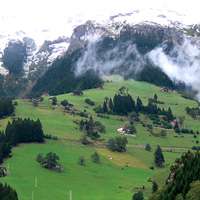
Photo credit: Dr Ioanna Sitaridou.
(PhysOrg.com) -- An endangered Greek dialect which is spoken in north-eastern Turkey has been identified by researchers as a "linguistic goldmine" because of its startling closeness to previous forms of the Greek language.
Fieldwork examining Romeyka, a little-studied form of Greek still spoken in the area around Trabzon, on Turkey's Black Sea coast, has revealed a number of features that it shares with the Koine (or common) Greek of Hellenistic and Roman times.
This video is not supported by your browser at this time.
For linguists, the discovery presents a rare opportunity to map out the features not just of another living language, but of a dialect closer than anything else still living to that spoken at the height of Greek influence across Asia Minor, 2,000 years ago.The link was (re)discovered by Dr. Ioanna Sitaridou, a lecturer in Romance Philology at the University of Cambridge and Fellow and Director of Studies in Linguistics at Queens' College, Cambridge. Her initial findings are reported in the University's research magazine, Research Horizons, and a short film about her research is also being released today.
"Although Romeyka can hardly be described as anything but a Modern Greek dialect, it preserves an impressive number of grammatical traits that add an Ancient Greek flavour to the dialect's structure - traits that have been completely lost from other Modern Greek varieties," Dr. Sitaridou said. "What these people are speaking is a variety of Greek far more archaic than other forms of Greek spoken today."
Until medieval times, the Black Sea lay at the heart of the Greek-speaking world. It was colonised by the Greeks in the 8th and 7th centuries BC and immortalised in Greek mythology.
Despite millennia of change in the surrounding area, people in the isolated region still speak the language. One reason is that Romeyka speakers are devout Muslims, and were therefore exempt from the large-scale population exchange between Greece and Turkey that took place under the Treaty of Lausanne in 1923.
Using religion as a defining criterion to resettle Christians in Greece and Muslims in Turkey, almost two million people were forced to move. The result was an obligatory exodus of all Christian Greek-speakers from north-eastern Turkey, leaving the speakers of Romeyka relatively isolated from both Turkish (albeit clearly not the case for the younger generations), but also sealed off from Pontic Greek spoken by the resettled Christians in Greece and elsewhere in the world.
Dr. Sitaridou, whose great-grandparents were from the region, is now reporting the results of the first phase of a project to uncover the secrets of this little-studied dialect.
She first became aware that Romeyka might be of special importance after Prof. Peter Mackridge, who is Emeritus Professor of Modern Greek at the University of Oxford and has carried out pioneering research since the 1980s, signalled to her that her work on Romance infinitives may have a parallel in Romeyka. Astonishingly enough, Romeyka had retained the infinitive - the basic, uninflected form of the verb. This was part of Ancient Greek, but has disappeared from the medieval and modern language. All the more astonishing, Romeyka has developed some other quirky infinitival constructions that have never been observed before - only in the Romance languages are there parallel constructions.
Her work involves undertaking field trips to villages in Pontus, often isolated enclaves where Romeyka is spoken, and mapping the grammatical structure and variation in use. Information is gathered using audio and video recordings of the villagers telling stories, as well as through specially-structured questionnaires using state-of-the-art modern linguistic theory.
Ultimately, the work seeks to explain how Pontic Greek evolved. "We know that Greek has been continuously spoken in Pontus since ancient times and can surmise that its geographic isolation from the rest of the Greek-speaking world is an important factor in why the language is as it is," said Dr. Sitaridou, recipient of a Stanley J. Seeger Visiting Research Fellowship in Hellenic Studies at Princeton University (Spring 2011).
"What we don't yet know is whether Romeyka emerged in exactly the same way as other Greek dialects, but later developed its own unique characteristics which just happen to resemble archaic Greek. On the other hand, it may have developed from an earlier version of Greek that was different to the rest of the Greek dialects, which in turn explains the archaic features."
Her latest report comes with a warning: Repeated waves of emigration from Trabzon, coupled with the influence of the dominant Turkish-speaking majority, have left the dialect vulnerable to extinction. UNESCO has already designated Pontic Greek as "definitely endangered".
"With as few as 5,000 speakers left in the area, before long Romeyka could be more of a heritage language than a living vernacular," Dr. Sitaridou added. "With its demise would go an unparalleled opportunity to unlock how the Greek language has evolved."
Provided by
University of Cambridge
-
From lemons to lemonade: Reaction uses carbon dioxide to make carbon-based semiconductor,
28 comments
-
Thioridazine kills cancer stem cells in human while avoiding toxic side-effects of conventional cancer treatments,
3 comments
-
SpaceX private rocket blasts off for space station (Update),
41 comments
-
Climate scientists say they have solved riddle of rising sea,
30 comments
-
Scotland passes turbine test to harness tidal power,
40 comments
-
Consumption rivalry
20 hours ago
-
Bilateral trade between all countries
May 24, 2012
-
Is the economic foundation of social media in jeopardy?
May 20, 2012
-
Psychology: Rosenthal and Hawthorne Effect
May 15, 2012
-
Is GDP and National Income the Same Thing?
May 13, 2012
-
Difference between hourly wage and real GDP per hour worked?
May 12, 2012
- More from Physics Forums - Social Sciences
More news stories
Math predicts size of clot-forming cells
UC Davis mathematicians have helped biologists figure out why platelets, the cells that form blood clots, are the size and shape that they are. Because platelets are important both for healing wounds and in strokes and other ...
21 hours ago |
not rated yet |
0
|
Social welfare cuts ultimately come with heavy price, researchers say
(Phys.org) -- Slashing government funding for Medicaid, food stamps and other programs that serve the poor while politically popular with some lawmakers and many conservatives may do more harm ...
Other Sciences / Social Sciences
May 24, 2012 |
4.3 / 5 (11) |
95
Ancient Bethlehem seal unearthed in Jerusalem
Israeli archaeologists have discovered a 2,700-year-old seal that bears the inscription "Bethlehem," the Israel Antiquities Authority announced Wednesday, in what experts believe to be the oldest artifact ...
Other Sciences / Archaeology & Fossils
May 23, 2012 |
3.5 / 5 (13) |
22
Oldest Jewish archaeological evidence on the Iberian Peninsula
German archaeologists of the Friedrich Schiller University Jena found one of the oldest archaeological evidence so far of Jewish Culture on the Iberian Peninsula at an excavation site in the south of Portugal, ...
Other Sciences / Archaeology & Fossils
May 25, 2012 |
4.3 / 5 (4) |
12
Dollars and sense: Why are some people morally against tax?
As the U.S. presidential election campaigns heat up, the economic debate is dominated by bailouts, austerity and, inevitably, taxation. Now a new study published in Symbolic Interaction asks why tax is such an important issue ...
Other Sciences / Social Sciences
May 23, 2012 |
3 / 5 (2) |
12
SpotterRF debuts Radar Backpack Kit (w/ Video)
(Phys.org) -- SpotterRF has announced a special radar backpack kit designed to enhance situational awareness for soldiers on the ground. The company says its special radar is designed for warfighters as part ...
Australia hails surprise super-telescope decision
Australia has hailed a surprise decision giving it a role in a radio telescope project aimed at revolutionising astronomy, vowing to draw on its decades of experience in space science.
Astronomers seize last chance in lifetime for Venus Transit
Astronomers are gearing for one the rarest events in the Solar System: an alignment of Earth, Venus and the Sun that will not be seen for another 105 years.
SpaceX capsule has 'new car' smell, astronauts say
SpaceX's Dragon cargo vessel smells like a new car, said astronauts at the International Space Station after opening the hatches Saturday following the spacecraft's landmark mission to the orbiting lab.
Family history of Alzheimer's affects functional connectivity
(HealthDay) -- Cognitively normal individuals with a family history of late-onset Alzheimer's disease (AD) may display lower resting state functional connectivity in the default mode network (DMN) of the brain, ...
Thousands of shellfish found dead in Peru
Thousands of crustaceans were found dead off the coast of Lima following the mystery mass death of dolphins and pelicans, the Peruvian Navy said Friday.
Jan 05, 2011
Rank: 5 / 5 (1)
Anyhow, the Pontic community in Greece claims to be the nearest "relative" to the ancient koine.
There is a 2003 Turkish movie, "Waiting for the Clouds", about the Romeyka speaking people.
More info in the "Pontic Greeks" wikipedia article.
Jan 05, 2011
Rank: not rated yet
Jan 05, 2011
Rank: not rated yet
But the Pontic and Romeyka dialects of the Greek language are thought to be quite similar to ancient Greek as spoken 2000 and more years ago.
Jan 05, 2011
Rank: not rated yet
Jan 06, 2011
Rank: not rated yet
Jan 06, 2011
Rank: not rated yet
This is contrasted by the relatively small differences between ancient and modern Greek.
Your notion of pre-Saxon English being close to Celtic puzzles me. Is pre_Saxon supposed to be a Celtic language? Then it should be very different from modern English.
Jan 10, 2011
Rank: 5 / 5 (1)
Indeed. Celts arrived in Britain in the Iron Age and developed the Brythonic language, from which emerged Welsh, Cornish, and Breton. The Romans brought Latin to Britain but pulled out in the 5th century. This vacuum was filled by West Germanic tribes, who formed the Anglo-Saxon Heptarchy: the Saxons (Essex, Wessex, Sussex), the Angles (East Anglia, Northumbria, Mercia), and the Jutes of Kent. In response to the Viking invasions and colonies under Danelaw, the Heptarchy united around Wessex to form England.
In 1013, the English kingdom fell to the Danes for 29 years and then again to the Normans in 1066. From then on the ruling elite spoke French while the English of the common man underwent massive changes, simplifying the grammar and absorbing words from French and Latin in ways that reflected the hierarchy of British society.
Jan 19, 2011
Rank: not rated yet
Those folks are called Thracians and they inhabited the Black Sea region for few millenniums more than Greeks did. So if the Flood happened in the Black Sea as some people claim, that would make Noah rather Thracians (or Pelasgian if you prefer).
I don't understand what is this Greek invasion these days to claim Pelasgian history as their own - it's not. Hellenic people came to the Balkans relatively late and there was already Thracian civilisation when they came.
As for the article, I wonder, could this new language be some mix between Thracian and Greek. Now that will be AWESOME! Too bad there is no good study on dialects in Turkey and Bulgaria to make the comparison complete.
Jan 19, 2011
Rank: not rated yet
Jan 19, 2011
Rank: not rated yet
I'll try to find the movie, because I heard the language in the video and it was very interesting.
But can you, please, tell me how that language is different from modern Greek? Because in Bulgaria we have many dialects and they all have something old and something new, depending on the history of the region, but nobody claims it's a version of our language from 2000 years ago. And the article doesn't mention why they decided Pontic is archaic Greek. Like examples with words or constructions that existed then and not now and so on (besides the infinitive).
Balkan history is extremely interesting subject, too bad it falls a victim of politics...
Jan 19, 2011
Rank: not rated yet
And anyway, if that language is really that old, they ought to be Thracian words in it - after all Greeks had very deep relations with Thracian tribes at the time - they exchanged words, gods, rituals, sometimes even married each other...it would be very odd if traces of that exchange are not kept in the archaic version of the language.
Jan 19, 2011
Rank: not rated yet
Jan 22, 2011
Rank: not rated yet
P.S. I don't trust wikipedia on Greek history. Every time I read it, I feel very angry and helpless. Unfortunately.