'iCrime' wave fuelled by insatiable appetite for smartphones
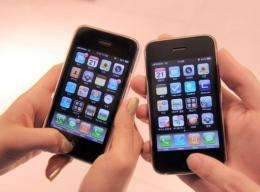
The fashionable folk tapping on Blackberrys or using apps on iPhones in New York, Paris or Barcelona have more in common than a taste for expensive hand-held devices.
They are also likely to be targeted by thieves in a smartphone crime wave fuelled by the enormous appetite for the machines that serve as status symbols, essential worktools and mobile entertainment centres.
The Paris police chief sounded the alarm last week when he said smartphones were the hottest item for thieves on the city's metro and that robbers were increasingly turning to violence to get their hands on them.
Seventy percent of all phones stolen on the transport system are now iPhones or Blackberrys or the other smartphones that can cost hundreds of euros (dollars), according to police figures.
Three men were beaten up in Paris, and one was stabbed, when they were set upon a week ago by a gang who wanted their iPhones. That was just one of the hundreds of violent incidents that police say happen in the French capital every month, three quarters of them involving telephone thefts.
In Britain, a 30-strong National Mobile Phone Crime Unit is battling what a police spokesman said is "a general increase in the proportion of thefts which involve smartphones."
Susana Ramirez, a 29-year-old author and newspaper columnist in the Spanish city Barcelona, told AFP that a blog she wrote about her fear of using her iPhone in public sparked a huge response from her readers.
"I look to the right and to the left before I get out my phone," she wrote in the blog. "As if, instead of a phone, I was about to take out a knife or a stash of drugs on the street."
In New York, public announcements warn subway commuters not to display phones or other electronic devices.
But few heed the warnings, and an average train sees many travellers hunched over their devices typing texts, watching video or playing games.
"It's like smoking. The consumer knows the risks but prefers to ignore them," said Jack Wraith, chairman of Britain's Mobile Industry Crime Action Forum.
"You can put applications on smartphones that make it absolutely impossible for a thief to access the data that's on there or to have any use out of the phone but very few people will do that," he lamented.
Wraith noted that Britain and many other countries had systems in place that render stolen phones useless by blocking them from national networks by using the handset's unique International Mobile Equipment Identity number.
But that has led to stolen phones being shipped abroad for sale in places like eastern Europe, Algeria, Morocco, or West Africa, where an iPhone can fetch several hundred dollars and up to 1,000 if it contains data that can be exploited for credit card or other fraud, he said.
Wraith said he did not believe that the risk of getting mugged would deter people from investing in smartphones because iPhones and Blackberrys are "iconic" items.
AFP requested an interview with both Apple and Research In Motion, the firm that makes Blackberrys, to ask if they thought the fear of theft might damage their sales and whether they should issue a health warning with every handset.
"We decline to comment," said Apple in an email, while Research In Motion failed to deliver on its promise to provide a spokesperson for comment.
Sales of both firms' smartphones are soaring, with Apple shifting 14.1 million iPhone units in the third quarter and Canada's Research in Motion shipped 12.4 million Blackberry devices, according to industry figures.
The huge and growing appetite for smartphones pushed global sales of mobile phones to a whopping 340.5 million units in the third quarter of 2010 alone, says industry tracker IDC.
That likely means that thefts of the machines are also soaring.
Consumers can protect themselves by taking out a good insurance policy or by buying an app that allows iPhone owners to remotely locate their lost or stolen set using its GPS system.
There were two reports in the past week alone -- one from Australia, the other from the US -- of police helicopters which happened to be in the area tracking down stolen iPhones using the GPS app and arresting the robbers.
(c) 2010 AFP


