Novel compounds show early promise in treatment of Parkinson's, Huntington's, Alzheimer's
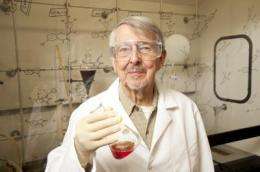
Investigators at Southern Methodist University and The University of Texas at Dallas have discovered a family of small molecules that shows promise in protecting brain cells against nerve-degenerative diseases such as Parkinson's, Alzheimer's and Huntington's, which afflict millions.
Dallas-based startup EncephRx, Inc. was granted the worldwide license to the jointly owned compounds. A biotechnology and therapeutics company, EncephRx will develop drug therapies based on the new class of compounds as a pharmaceutical for preventing nerve-cell damage, delaying onset of degenerative nerve disease and improving symptoms.
Treatments currently in use don't stop or reverse degenerative nerve diseases, but instead only alleviate symptoms, sometimes with severe side effects. If proved effective and nontoxic in humans, EncephRx's small-molecule pharmaceutical would be the first therapeutic tools able to stop affected brain cells from dying.
"Our compounds protect against neurodegeneration in mice," said synthetic organic chemist Edward R. Biehl, the Chemistry Department professor who led development of the compounds at SMU. "Given successful development of the compounds into drug therapies, they would serve as an effective treatment for patients with degenerative brain diseases."
EncephRx initially will focus its development and testing efforts toward Huntington's disease and potentially will have medications ready for human trials in two years, said Aaron Heifetz, CEO at EncephRx.
Compounds developed by SMU and UTD collaboration
Biehl developed the compounds in collaboration with UT Dallas biology professor Santosh R. D'Mello, whose laboratory has been studying the process of neurodegeneration for several years.
"Additional research needs to be done, but these compounds have the potential for stopping or slowing the relentless loss of brain cells in diseases such as Alzheimer's and Parkinson's," said D'Mello, professor of molecular and cell biology at UT Dallas, with a joint appointment in the School of Brain and Behavioral Science. "The protective effect that they display in tissue culture and animal models of neurodegenerative disease provides strong evidence of their promise as drugs to treat neurodegenerative disorders."
Millions are suffering, particularly the elderly
Parkinson's, Huntington's and Alzheimer's are disorders of the central nervous system marked by abnormal and excessive loss of neurons in a part of the mid-brain, say the researchers.
The diseases steadily erode motor skills, including speech and the ability to walk, cause tremors, slowed movement, stooped posture, memory loss and mood and behavior problems.
The risk of developing a degenerative nerve disease increases with age. These diseases affect more than 5 million Americans.
Novel compounds effectively proved protective in initial studies
One member of a class of heterocyclic organic compounds, the synthetic chemicals developed and tested by SMU and UT Dallas scientists, was shown to be highly protective of neurons in tissue culture models and effective against neurodegeneration in animal models.
The most promising lead compound, designated HSB-13, was tested in Huntington's disease animal models. It not only reduced degeneration in a part of the forebrain but also improved behavioral performance while proving nontoxic. The compound also was efficacious in a commonly used fly model of Alzheimer's disease.
"These preliminary tests demonstrated that the compound was an extremely potent neuroprotective agent," Biehl said.
The findings were published in the article "Identification of novel 1,4-benzoxazine compounds that are protective in tissue culture and in vivo models of neurodegeneration," which appeared in the Journal of Neuroscience Research. The National Institutes of Health and the Defense Advanced Research Projects Agency funded the project. See www.smuresearch.com for a link to the article abstract.
The SMU and UT Dallas researchers developed and tested more than 100 compounds for neuroprotective efficacy and toxicity over the course of four years before making the discovery in 2007.
Interinstitutional partnership with EncephRx
SMU researchers will assist EncephRx in optimizing the primary compound, and the UT Dallas team will support testing and analysis.
"While discovery of the compounds is a major accomplishment, many hurdles remain," Biehl said.
EncephRx is a university spinout formed to develop and commercialize the compounds. Its management team has proven success in all facets of drug development and has developed more than a dozen chemical compounds.
Aaron Heifetz, president and chief executive officer of EncephRx, Inc., said, "We believe this library of novel neuroprotective compounds will prove an important step in the effort to improve the health for patients with neurodegenerative diseases, such as Huntington's disease, Alzheimer's disease and Parkinson's disease."
Chris Jeffers, managing partner of FirstStage Bioventures, the parent company of EncephRx, added, "FirstStage is very excited about this technology and looks forward to helping EncephRx quickly move these compounds into the clinic."


