China's Baidu expands as Google contracts
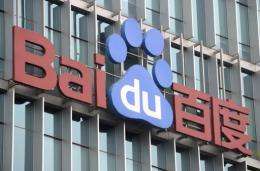
The name of the search engine "Baidu" means "hundreds of times", and comes from an ancient Chinese verse often cited today to refer to the continuous search for one's dreams.
The name could not be more apt for a company that dominates Chinese-language Web searches and has enjoyed a dream year in which it widened its already big lead over US-based Google in the world's largest online market.
The year did not start out that way.
As 2010 dawned, Baidu watched as its closest competitor steadily expanded its share of the market in China.
But then came Google's high-profile spat with China's government over censorship and allegations of cyberattacks that caused the global Internet giant to reduce its presence.
Now, Baidu is the dominant search engine amongst the country's estimated 420 million Internet users, such as Gao Yang.
The self-confessed web fanatic spends five hours a day online and says he simply could not survive without Baidu.
"It is convenient -- you can search for anything," the 27-year-old entertainment industry worker said as he surfed the web in the dim light of an Internet cafe in Beijing.
Nearly all his friends are similarly hooked on Baidu, an allegiance born of the company's savvy exploitation of Chinese tastes.
"I'm not familiar with Google or other search engines," Gao said as he hacked an evil creature to death in the popular Internet game World of Warcraft.
But critics say another factor has helped cement Baidu's lead -- its willingness to abide by the huge Chinese system of state Internet censorship that has been dubbed "the Great Firewall of China."
The blocking of content deemed by the ruling Communist Party to be a political threat is something Baidu does not deny.
"We do have an aggressive and extensive system to comply with regulations," Baidu spokesman Kaiser Kuo told AFP. "We simply are required to do that, to have that in place. There is really no getting around it.
"It's a way of protecting yourself from unpleasant consequences of failing to do that.

"As to whether we are enjoying any kind of favour because of that, I think you need to only look at the way that some government-owned media have treated Baidu in recent years to realise that we do not play on a tilted playing field against our competitors.
"We are as badly beaten on sometimes as anyone else."
Baidu was founded by Robin Li in 2000 with a staff of only 10 and is now the world's fourth-largest Internet company. It has grown its market share from 64 percent earlier in the year to 73 percent, as Google's share shrivelled.
Meanwhile, Google had a 31 percent share in the first quarter of this year, declining to just over 21 percent, according to Internet research firm Analysys International.
Baidu is now looking to build on its successes by diversifying its offerings in the world's largest Internet market and by going global.
"Search is a very highly competitive game. For a user to leave us and go to somebody else, it's just one click," Kuo said.
"So we have to continue to offer better products to keep them with us."
The company's driving force is Li, a State University of New York graduate who created Baidu in Beijing at the age of 31 after quitting as an engineer at US web search pioneer Infoseek.

Li was already on a par with Google founders Larry Page and Sergey Brin from the start as he was formulating a similar search function called RankDex -- which became the backbone of Baidu -- just as they were creating Google.
Li also later made crucial decisions such as rejecting a 1.6-billion-dollar Google takeover bid before Baidu's Nasdaq listing in 2005.
The company's market capitalisation is now worth 38 billion dollars.
Baidu has stayed tops with a focus on Chinese needs and tastes in its searches. It drove traffic in its early days largely through an MP3 search that provided links to free but often pirated pop music downloads.
With the threat once posed by Google waning, Baidu's net profit more than doubled in each of the past two quarters as advertisers deserted the US rival.
But Baidu must stay nimble to meet the challenges of upstart Chinese search engines eager to fill the Google gap, analysts say.
"Competition for distribution networks and (advertising) resellers is more intense than before," said Li Zhi, a Beijing-based analyst with Analysys.
China Mobile, the world's largest mobile phone operator, has signed an agreement with state-run Xinhua news agency to launch a search engine.
Meanwhile, popular Chinese portal Sohu has tied up with e-commerce giant Alibaba in a bid to expand its search engine unit Sogou.

Another challenge could come from authorities worried over Baidu's increasing dominance, said Duncan Clark, chairman of research firm BDA China.
"The concern is if consumers' interests are not protected over privacy or the advertisers feel that they are squeezed," he said.
"Sometimes having a strong global competitor is the best thing for you."
Kuo said Baidu has identified cooperation and diversification as its future.
This year, it launched an e-shopping mall with Japanese web retailer Rakuten, a video website called Qiyi, and unveiled a platform allowing users to run games, videos, and other applications on Baidu.com.
Baidu has offered a Japanese-language search engine for two years and Li wants it to become a household name in half the world's countries in 10 years.
But BDA's Clark was sceptical over such goals, citing cultural barriers and inexperience abroad.
"Organically I don't see how they can (expand overseas), unless there is some technology shift and they become a leader," he said.
"Most non-Chinese speakers, they don't even know how to say Baidu."
(c) 2010 AFP


