A breakthrough in the struggle against the increasingly resistant malaria parasite
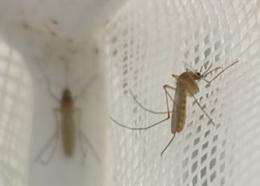
About every minute two children die from malaria caused by a parasite in the genus Plasmodium. Researchers have recently identified pivotal regulators controlling the malaria parasite’s transmission and found that more than a third of them can be disrupted. This is a breakthrough in the struggle against the increasingly resistant malaria parasite and the search for improved drugs and effective vaccines.
According to the World Health Organization, every year almost one million people die due to infection by the malaria parasite and its subsequent asexual replication in red blood cells and the organization estimates about 250 million malaria infections. However, some malaria researchers such as Ali Salanti at the University of Copenhagen claim that up to three million people are killed by the malaria parasite per year. Researchers led by the School of Biology at The University of Nottingham, in collaboration with the Wellcome Trust Sanger Institute in the UK, have identified regulators controlling the three key stages in the malaria parasite’s life cycle. These regulators are enzymes called protein kinases (PKs) catalyzing phosphorylation reactions. The goal is to block the transmission of the parasite by inhibiting PKs.
The researchers studied the malaria parasite Plasmodium berghei infecting rodents. The PKs are highly conserved between Plasmodium species; PKs which are very similar to this rodent parasite’s PKs can be found in Plasmodium species infecting humans. The researchers found that more than a third of the malaria parasite’s PK genes are not required for the parasite’s life cycle stage when infecting and developing within red blood cells. This result means that focus can be directed towards the other approximately two thirds of the PKs which could be targets for drugs against this stage. The researchers highlighted that many genes pursued for anti-malaria medicine development are not those redundant genes.
An important challenge will be to inhibit many of the malaria parasite’s essential PKs to prevent fast drug resistance emergence, while not affecting the human PKs. The researchers suggested that this could be achieved, for example, by blocking multiple sites within the CDPKs included in a unique malaria parasite PK subgroup. CDPKs have a mode of regulation and domain architecture only found in plants.
In September, researchers also led by The University of Nottingham published results which showed that the PF16 protein is required for flagellar structure and function in Plasmodium’s male sex cells, and disruption of the PF16 gene gives rise to reduced fertility and abnormal flagellar movement. The researchers used the model organism Plasmodium berghei in this study as well and could show that certain parts of the PF16 protein are highly conserved across all eukaryotes. These results suggest other ways of targeting the malaria parasite in drug development.
There are many promising results within the malaria research field which could lead to improved drugs and effective vaccines. However, even if this would be achieved within a few years, effective distribution and subsidy strategies are crucial to drastically reduce the number of infections and deaths.
Provided by Youris.com


