Tetris flashback reduction effect 'not common to all games'
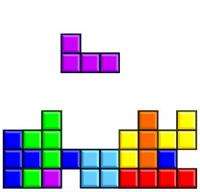
The computer game Tetris may have a special ability to reduce flashbacks after viewing traumatic images not shared by other types of computer game, Oxford University scientists have discovered in a series of experiments.
In earlier laboratory work the Oxford team showed that playing Tetris after traumatic events could reduce memory flashbacks in healthy volunteers. These are a laboratory model of the types of intrusive memories associated with post-traumatic stress disorder (PTSD).
In this new experimental study, the researchers compared the effectiveness of Tetris at reducing flashbacks with Pub Quiz Machine 2008, a word-based quiz game. They found that whilst playing Tetris after viewing traumatic images reduced flashbacks by contrast playing Pub Quiz increased the frequency of flashbacks.
A report of the research is published in this week's edition of the journal PLoS ONE.
In two separate experiments, the team showed a film to healthy volunteers that included traumatic images of injury from a variety of sources, including adverts highlighting the dangers of drink driving – a recognised way to study the effects of trauma in the laboratory.
In the first experiment, after waiting for 30 minutes, 20 volunteers played Tetris for 10 minutes, 20 played Pub Quiz, in which they had to select one of four on-screen answers, for 10 minutes and 20 did nothing. Those who had played Tetris experienced significantly fewer flashbacks of the film than those who did nothing, whilst those who played Pub Quiz experienced significantly more flashbacks.
In the second experiment, this wait was extended to four hours, with 25 volunteers in each group. Those who played Tetris again had significantly fewer flashbacks that the other two groups. In both experiments, all groups were equally able to recall specific details of the film.
'Our latest findings suggest Tetris is still effective as long as it is played within a critical six-hour window after viewing a stressful film,' said Dr Emily Holmes of Oxford University's Department of Psychiatry, who led the work. 'Whilst playing Tetris can reduce flashback-type memories without wiping out the ability to make sense of the event, we have shown that not all computer games have this beneficial effect – some may even have a detrimental effect on how people deal with traumatic memories.'
These latest findings support how the team believes the approach works:
The mind is considered to have two separate channels of thought: one is sensory and deals with our direct perceptual experience of the world through sight, sound, smell, taste and touch. The other channel is conceptual, and is responsible for putting together these perceptual experiences in a meaningful way – putting them into context. Generally, these two channels work in balance with each other, for example, we would use one channel to see and hear someone talk and the other to comprehend the meaning of what they are saying.
However, when someone is exposed to traumatic information, these channels are thought to function unequally so that the perceptual information is emphasised over the conceptual information. This means we are less likely to remember the experience of being in a high-speed road traffic collision as a coherent story, and more likely to remember it by the flash of headlights and noise of a crash. This perceptual information then pops up repeatedly in the victim's mind in the form of flashbacks to the trauma causing great emotional distress, as little conceptual meaning has been attached to them.
Research tells us that there is a period of up to six hours after the trauma in which it is possible to interfere with the way that these traumatic memories are formed in the mind. During this time-frame, certain tasks can compete with the same brain channels that are needed to form the memory. This is because there are limits to our abilities in each channel: for example, it is difficult to hold a conversation while doing maths problems.
The Oxford team reasoned that recognising the shapes and moving the coloured building blocks around in Tetris competes with the images of trauma in the perceptual information channel. Consequently, the images of trauma (the flashbacks) are reduced. The team believe that this is not a simple case of distracting the mind with a computer game, as answering general knowledge questions in the Pub Quiz game increased flashbacks. The researchers believe that this verbal based game competes with remembering the contextual meaning of the trauma, so the visual memories in the perceptual channel are reinforced and the flashbacks are increased.
Dr Holmes said: 'Whist this work is still experimental, and any potential treatment is a long way off, we are beginning to understand how intrusive memories/flashbacks are formed after trauma, and how we can use science to explore new preventative treatments.'
The group will continue to develop this approach further as a potential intervention to reduce the flashbacks experienced in PTSD, but emphasise that the research is still in the early stages, and careful steps need to be taken before this can be tested clinically.
More information: Holmes EA, James EL, Kilford EJ, Deeprose C (2010) Key Steps in Developing a Cognitive Vaccine against Traumatic Flashbacks: Visuospatial Tetris versus Verbal Pub Quiz. PLoS ONE 5(11): e13706. doi:10.1371/journal.pone.0013706


