Simple blood test may diagnose deadly Niemann-Pick type C disease (w/ Video)
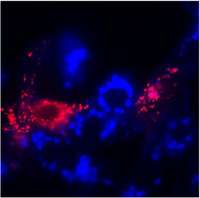
(PhysOrg.com) -- A fatal genetic disorder that frequently takes years to diagnose may soon be detectable with a simple blood test, researchers at Washington University School of Medicine in St. Louis and the National Institutes of Health (NIH) report this week in Science Translational Medicine.
For patients with Niemann-Pick type C (NPC) disease, the test will make it possible to begin treatment earlier, when it is more likely to improve quality of life and to further extend lives.
"NPC is a horrible disease that is easy in its early stages to mistake for other conditions, both because it's so rare and because it has so many different manifestations," says senior author Daniel S. Ory, MD, professor of medicine and of cell biology and physiology at Washington University School of Medicine in St. Louis. "This is an important step forward both in terms of making a definitive diagnosis much easier and in terms of providing us with a way to quickly assess the effectiveness of experimental treatments."
There is no U.S.-approved treatment for NPC, which is estimated to affect approximately 1 in 100,000 people worldwide. Miglustat, an inhibitor of complex lipid synthesis, is approved for NPC treatment in Europe, Canada, Russia, Brazil and Taiwan.
Insights from the study may also help scientists better understand health problems in people who are carriers of the disorder, which may include 3 million to 6 million in the United States alone. Having a single mutated copy of the NPC 1 or 2 genes does not cause NPC, but the study's results have led scientists to speculate that it may contribute to heart disease, diabetes and other common illnesses.
"What we learn from studying rare diseases often can be very helpful not only for patients with those rare disorders, but also for efforts to treat much more common conditions," Ory says.
Ory is co-director of the new Diabetic Cardiovascular Disease Center at Washington University. The interdisciplinary center, which explores the links between diabetes and cardiovascular disease, was established through BioMed 21, a Washington University initiative dedicated to speeding the development of laboratory insights into advances in clinical diagnosis and treatment.
NPC typically manifests in childhood with a variety of symptoms including problems walking, slurring of speech and difficulty swallowing. In later stages, it immobilizes patients, causing seizures, dementia and death.
NPC belongs to a class of inherited diseases known as lysosomal storage disorders. The disorder breaks down the cell's normal patterns for handling cholesterol, leading it to accumulate in lysosomes, pockets in the cell that act as garbage disposals. Ory and his colleagues had earlier shown in an NPC mouse model that this causes a buildup in cells of cholesterol that has undergone a chemical change known as oxidation. This change makes the cholesterol more chemically reactive and dangerous to the cells.
To test if these oxidized forms of cholesterol could be used as markers for NPC, Ory collaborated with first author Denny Porter, MD, PhD, an NIH researcher who has assembled one of the largest NPC observational studies. Porter conducts regular health assessments of more than 50 patients with NPC and has amassed a collection of tissue specimens from these patients for purposes of developing new disease markers.
Scientists tested tissue samples in the metabolomics facility of the Diabetic Cardiovascular Disease Center. In NPC patients, two oxidized forms of cholesterol were present at levels nine to 10 times higher than normal. The same markers were not elevated in healthy children and adults or in persons with elevated cholesterol levels, heart disease, diabetes or other forms of lysosomal storage disorders.
"These markers have all the characteristics we wanted for a clinical test, and we're now working to develop it into a clinical assay," Ory says. "We want to make the possibility of testing for NPC much easier for physicians to consider if they see the slightest hints that it might be present."
Given the potential advantages that presymptomatic treatment of NPC may offer, including improved quality of life and extended lifespan, Ory also hopes to get people thinking about the possibility of adding NPC to the recommended neonatal screenings.
"We're not sure we fully appreciate the impact of this disease, which may be more common than we think," he explains. "It could be very helpful to get a better handle on that via neonatal screening."
Although no group that scientists screened had levels of the two key markers as high as the NPC patients, the markers were significantly increased in parents and siblings of NPC patients. Many of these family members have one mutated NPC gene and are carriers of the disease.
"These markers are indicative of an increased level of stress in cells, and this same kind of stress is seen in many other disorders, including heart disease, diabetes and neurodegenerative disorders such as Alzheimer's disease," Ory says. "We need further research to confirm this, but it's possible that some of the same damaging mechanisms that take place in NPC patients may be occurring to a lesser degree in persons who only have one mutated copy of an NPC gene and are putting them at increased risk of other disorders."
If carriers of the disease do have an increased risk of other conditions as a result, new treatments for NPC may also help them, according to Ory.


