New path for colon cancer drug discovery
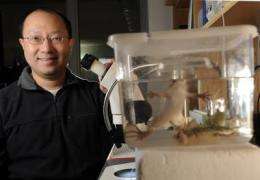
An old pinworm medicine is a new lead in the search for compounds that block a signaling pathway implicated in colon cancer. The findings, reported by Vanderbilt University Medical Center researchers in the November issue of Nature Chemical Biology, suggest a fresh approach for developing therapeutics that target the pathway.
More than 90 percent of sporadic (non-inherited) colon cancers – the second deadliest type of cancer in the developed world – are caused by mutations that result in inappropriate activation of the Wnt (pronounced "wint") signaling pathway. Blocking this pathway has been a desirable therapeutic target, but its complexity has made it difficult to determine which molecular participants to inhibit.
"There's no obvious target in the pathway where we could say, 'OK, if we inhibit the activity of this protein, that will inhibit Wnt signaling,'" said Ethan Lee, M.D., Ph.D., associate professor of Cell and Developmental Biology, Vanderbilt-Ingram Cancer Center researcher, and senior investigator of the current study.
Lee and his colleagues were interested in understanding the details of the Wnt pathway, which also plays an important role in early development. In frogs, loss of early Wnt signaling results in headless embryos; too much early Wnt signaling causes two heads to form.
"To me, that's really quite remarkable and says this pathway is biologically important," Lee said.
To explore Wnt signaling at a biochemical level, Lee and his team developed frog embryo extracts and showed that this cell-free system retained many events of the Wnt signaling pathway. Using this system, they established a screening strategy to search for chemicals that modify Wnt signaling – with the goal of learning more about the biology of the pathway.
The investigators screened several thousand chemical compounds, from a "library" of FDA-approved drugs and other bioactive compounds. They found that pyrvinium, an FDA-approved anti-parasite drug, blocked Wnt signaling in the frog extracts.
They tested pyrvinium in cultured cells and in multiple animal models of early development (frogs, nematode worms, fruit flies) and demonstrated that in each case, pyrvinium blocked Wnt signaling. They also found that in cultured colon cancer cells, pyrvinium inhibited both Wnt signaling and cell proliferation.
To identify the target of pyrvinium, Lee and his colleagues combined four isolated proteins, all with known roles in the Wnt pathway. They found that pyrvinium increased the activity of one of the proteins, an enzyme called casein kinase 1alpha (CK1alpha).
The activation of a kinase – as a way to inhibit the Wnt signaling pathway – was unexpected, Lee said.
"The targeted cancer therapies that are being intensively studied right now are mostly kinase inhibitors," he said. "It's intriguing to think that maybe there are certain kinases – like CK1alpha – that we can activate as targets for treating cancer."
Pyrvinium stays in the gastrointestinal tract (to treat pinworms), so Lee is working with collaborators in the Vanderbilt Institute of Chemical Biology to develop new CK1alpha inhibitors. He is also collaborating with Pampee Young, M.D., Ph.D., associate professor of Pathology and Medicine, to study the Wnt pathway's role – and pyrvinium's effects – on cardiac repair after myocardial infarction.
"Our original goal in developing the screening strategy was to find compounds that would tell us something about the biology of the Wnt pathway," Lee said. "It's an added bonus that these compounds could be useful therapeutic agents in heart disease or cancer."
The frog embryo extract and screening strategy may also be applied to identifying compounds that modify other developmentally important signaling pathways, Lee added.
Provided by Vanderbilt University Medical Center


