New eruption could be looming in Iceland, experts warn
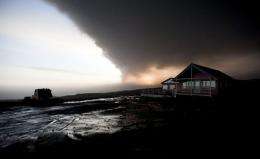
An Icelandic volcano has shown signs it could be about to burst into life, just months after an eruption from another volcano caused Europe's biggest air shutdown since World War II, experts said Monday.
"The water levels have tripled in (the river) Gigja since last night," water measurement specialist Gunnar Sigurdsson of the Icelandic Meteorological Institute told AFP.
The water flooding into the Gigja, on the Vatnajoekull glacier in eastern Iceland, comes from an icy lake in the crater of the Grimsvoetn volcano.
Due to increased thermal temperatures, the lake and surrounding glacier area has melted, filling the crater to a point where it has spilled over and caused a so-called river-run, which in turn could easily set off an eruption.
"When a river-run occurs, the pressure, in this case, in Grimsvotn, decreases, and with less pressure, there is a chance of an eruption from the volcano," Thorunn Skaftadottir, a geophysicist also with the Icelandic Meteorological Institute told AFP.
"This is not guaranteed," she pointed out, since an eruption "can only happen if the volcano has collected enough magma."
In 2004, a similar flood from the Grimsvoetn lake was closely followed by an eruption from what is considered Iceland's most active volcano.
Sigurdsson said an eruption was unlikely to occur "until the water levels in Gigja have reached a maximum.
"I don't know when we can expect the levels to reach their highest point, but I suspect it will be in a few days," he said.
Over the past 48 hours, the Meteorological Institute has also registered strong seismic activity in the area, and three moderate earth quakes ranging from 2.7 to 4.0 on the Richter scale.
Icelandic authorities were however unable Monday to say whether an eruption at Grimsvotn would hit air traffic as hard as in April when the Eyjafjoell volcano erupted, dispersing a massive cloud of ash which affected more than 100,000 flights and eight million passengers.
"It is near impossible to say if Grimsvotn erupts whether it will have an affect on air traffic at all," said Keflavik Airport spokeswoman Hjordis Gudmundsdottir, pointing out it would depend if the volcano spewed lava or ash.
"If it is an ash eruption, then it would affect air traffic, but only if it is a strong eruption with ash clouds reaching significant heights," she said, adding "it will also depend on wind, so at this point it is hard to guess."
Skaftadottir meanwhile said that any eruption from Grimsvotn would be an ash eruption.
"However, the scale of the eruption will be much smaller than the Eyjafjoell eruption and I do not think it would have the same effect on air travel as Eyjafjoell did," she said.
(c) 2010 AFP


