Harry Potter likely to endure for generations, says literary expert
November 17, 2010

Harry Potter likely to endure for generations, says literary expert

Credit: Warner Bros. Pictures

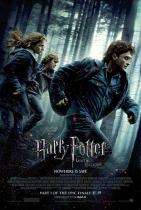
With the release of the movie "Harry Potter and the Deathly Hallows, Part 1" on Nov. 19, the official telling of the story of the boy wizard is nearing its end. But Steven Herb, director of the Pennsylvania Center for the Book at Penn State, believes author J.K. Rowling's imaginative and well-crafted tale is likely to stay popular for generations to come.

"The cultural phenomenon aspect of it certainly raised up these books," said Herb, an education librarian and children's author. "But they are actually well constructed and well written, and they are outstanding examples of serial fiction. Who knows how to define a classic, but they will be around and read for a long time."

That phenomenon spawned by Rowling's seven novels and their accompanying film adaptations is not entirely uncommon in popular culture, but rare in literature.
Herb pointed to another pop culture icon that enjoyed near-hysterical popularity at its height but endures as it is adopted by new generations.

"An analogy I would give is there is only one generation who remembers where they were when they heard a particular Beatles song, but there are today millions of people who are still buying Beatles music," he said. "The people who dressed up and stood in line for the books experienced the Harry Potter phenomenon firsthand, but many people will continue to experience those books for generations."

Some series, like the teen vampire romance Twilight, have experienced bursts of enormous popularity akin what the Harry Potter books sustained for more than a decade. Others, Herb said, such as the work of the Beat writers of the 1950s, were strongly embraced over a long period of time by particular cultural groups and became important pieces of American literature. Still others endure as their audience -- and the works' interpretations -- are redefined.

"Lewis Carroll and the Alice books -- I just don't think children are reading them much anymore, but mathematicians and computer scientists are," Herb said.

For Rowling's books, the archetypal tale of good versus evil should aid its longevity. But the complexity and depth of the books also broaden interest, Herb explained.

"There are lots of references to lots of types of literature. That's wonderful when you can spend time looking at it as an exciting adventure and spend time looking at it as something complex," he said. "It's right for a third grader who reads it and thinks, 'My gosh, this is what reading is all about,' and for someone who is looking at it in an academic setting and presenting a paper. That's a pretty amazing breadth if you think about it."

The well-received film adaptations also have served to work in concert with the novels to strengthen the franchise. Readers are naturally interested in the films, and moviegoers may in turn become interested in the books. Meanwhile, the release of a new film in the series spurs fans to revisit what they've already seen and read, Herb said.

"The two elements help to pull the consumer along," he said. "There are some people who see the movies and have no intention to read the books, but that is a rare group. I suspect it's much rarer than people who read the books but don't see the movies. And I've talked to people who will re-read from start to finish the previous six or all seven books before this new movie comes out."

The widespread interest in the novels is likely to be passed on to future generations as parents become eager to share their enthusiasm for the books with their children, a notion which bodes well for youth reading in general.

"I think people will want to share that experience," Herb said. "Interest in exciting literature is certainly a habit we want to share with our kids, because kids learn a lot more by what they are shown than what they are told. Having excitement for literature is a good model for kids. I don't think this will be too hard for people to do that with. Because it was such a broad readership and range of ages, I think this one will be stronger for the next couple generations than other fantasy fiction that goes through highs and lows."

The franchise's influence extends into the world of publishing and beyond as authors and their publishers seek to build on Rowling's precedent.

"The influence is huge," Herb explained. "I'd be hard-pressed to name a fantasy author who isn't thinking in multiple volumes. There is more fantasy literature out there right now for middle school kids on up than any time I can remember in the 30 years I've worked in children's literature. Publishers are pushing for this, too, to find other authors who will capture the hearts and minds of the Harry Potter readers. Nobody has at that level, of course, but I don't think we could have predicted when the first Harry Potter book was written that this would have happened at all."

Provided by Pennsylvania State University search and more info website

4.3 /5 (3 votes)  

Filter


Move the slider to adjust rank threshold, so that you can hide some of the comments.


Display comments: newest first

Ravenrant
Nov 17, 2010

Rank: 5 / 5 (1)
You don't need to be a literary expert to know that the Harry Potter book series is nothing short of a masterpiece. I wasn't sure until I read the last book, she tied up every loose end and explained everything perfectly, pure genius.

It's too bad she didn't exhibit that genius by controlling the movies. They should have been done like Peter Jackson did the Lord of the Rings, followed the books faithfully, they are that good. As good as the movies are, like the first LotR adaptations, they aren't the definitive versions, hopefully that will be done in my lifetime.
ArcainOne
Nov 17, 2010

Rank: not rated yet
I'm not sure I'd call it a "Masterpeice" (I am still debating that with myself), but they are pretty damn good. And I agree whole heartedly though that they should have followed the books as Peter Jackson did with the Lord of the Rings (he even elaborated a bit). If you've never read the books the movies are great... if you've read the books the movies are a tragedy. Who knows, maybe one day in about 10-20 years they will remake the movies better...
Ethelred
Nov 18, 2010

Rank: not rated yet
For me five of the books are good to very good. The last two Harry stops getting smarter. Gets a bit stupid at times just to keep the plot going.And book 7 needed editing. Not shorter so much as the tent crap went on too long.

For those that like the books many here on this site might like a particular fanfiction that is still being written.

Harry Potter and the Methods Rationality.

Which has Harry's Aunt marrying a scientist instead of a drill salesman.

http://www.fanfic...ionality

I have read 23 or so chapters so far.

Ethelred
Rank 4.3 /5 (3 votes)
Relevant PhysicsForums posts

More news stories

Math predicts size of clot-forming cells

UC Davis mathematicians have helped biologists figure out why platelets, the cells that form blood clots, are the size and shape that they are. Because platelets are important both for healing wounds and in strokes and other ...

Other Sciences / Mathematics

created 1 hour ago | popularity not rated yet | comments 0 | with audio podcast

Oldest Jewish archaeological evidence on the Iberian Peninsula

German archaeologists of the Friedrich Schiller University Jena found one of the oldest archaeological evidence so far of Jewish Culture on the Iberian Peninsula at an excavation site in the south of Portugal, ...

Other Sciences / Archaeology & Fossils

created 5 hours ago | popularity 4.3 / 5 (3) | comments 11

Dinosaur with tiny arms unearthed in Argentina

Argentine experts have discovered the near-complete remains of a new species of Jurassic-era dinosaur that stood on its rear legs and had tiny arms, according to a leading paleontologist.

Other Sciences / Archaeology & Fossils

created 13 hours ago | popularity 5 / 5 (1) | comments 0

Earliest musical instruments in Europe 40,000 years ago

The first modern humans in Europe were playing musical instruments and showing artistic creativity as early as 40,000 years ago, according to new research from Oxford and Tübingen universities.

Other Sciences / Archaeology & Fossils

created 8 hours ago | popularity 5 / 5 (1) | comments 0

Talking works: UB professor develops method to analyze creative problem solving

(Phys.org) -- Talk -- if it's the right kind -- can increase creativity, leading students to create useful, new ideas that solve problems, a University at Buffalo professor has found by using a statistical tool that he invented.

Other Sciences / Social Sciences

created 10 hours ago | popularity not rated yet | comments 0


Yahoo! ditches digital newsstand for iPads

Yahoo! shuttered its fledgling digital newsstand for iPads on Friday in what it said was the start of a product purge intended to make the floundering Internet pioneer more nimble.

Of mice and mental models: Neuroscientific implications of risk-optimized behavior in the mouse

(Medical Xpress) -- Regardless of an organism’s biological complexity, every encephalized animal continuously makes under-informed behavioral choices that can have serious consequences. Despite its ubiquity, ...

Dragon arrives at space station in historic 1st (Update 2)

The privately bankrolled Dragon capsule made a historic arrival at the International Space Station on Friday, triumphantly captured by astronauts wielding a giant robot arm.

Skp2 activates cancer-promoting, glucose-processing Akt

HER2 and its epidermal growth factor receptor cousins mobilize a specialized protein to activate a major player in cancer development and sugar metabolism, scientists report in the May 25 issue of Cell.

MIT researchers devise new means to synchronize a group of robots (w/ Video)

(Phys.org) -- For several years, roboticists have been working out ways to get a group of robots to perform synchronized activities as demonstrated most often in dance routines. It’s not just about trying ...

Landmark calculation clears the way to answering how matter is formed

(Phys.org) -- An international collaboration of scientists, including Thomas Blum, associate professor of physics, is reporting in landmark detail the decay process of a subatomic particle called a kaon – ...