Feds are investigating drinking glasses with lead
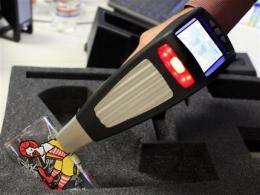
(AP) -- Federal regulators launched an investigation Monday into lead levels in drinking glasses depicting comic book and movie characters, declaring that the items are subject to standards for "children's products."
Testing commissioned by The Associated Press revealed that the glasses contained lead up to 1,000 times the federal limit for children's products - as much as 30 percent by weight. The items also contained lesser amounts of the more-toxic metal cadmium.
The glasses - with colorful designs depicting the likes of Superman, Wonder Woman and characters from "The Wizard of Oz" such as Dorothy and the Tin Man - did not release high amounts of lead from the decorations, and no one would be injured by handling them. The issue is whether the glasses, made in China, comply with strict federal law on how much lead can be in a children's product.
The importer of the glasses, Vandor LLC of Utah, told AP the glasses are targeted to adult collectors and that they passed testing for lead.
But a spokesman for the U.S. Consumer Product Safety Commission, Scott Wolfson, said Monday that the agency considers the glasses children's products and is currently collecting samples for its own testing.
That determination mattered because if regulators concluded they were not children's products, the glasses wouldn't be subject to strict lead limits. The federal limit on children's products is 0.03 percent - AP's testing showed the lead content in the colored decorations was between 16 percent and 30.2 percent.
Neither Vandor nor Warner Brothers, which sold the glasses that AP bought for testing at the entertainment giant's studio store in Burbank, Calif., immediately responded to requests for comment.
Last week, while commenting on AP's test results, Warner Brothers said, "It is generally understood that the primary consumer for these products is an adult, usually a collector."
However, on Warner Brothers' website, the superhero glasses are sold alongside kids' T-shirts with similar images and a school lunch box. An online retailer, http://www.retroplanet.com , describes the 10-ounce glasses as "a perfect way to serve cold drinks to your children or guests."
Wolfson said the agency also would be collecting samples of other glasses highlighted in AP's investigation. "Those that have decorations that children would be attracted to are the focus of our attention at this point," he said.
Meanwhile, the Coca-Cola Co. voluntarily recalled 88,000 glasses that shed cadmium during separate AP testing that recreated what could escape from decorations during regular handling. The glasses came in sets of four and were designed to look like cans of Coke, Diet Coke, Coke Zero and Sprite.
Coke said late Sunday that the all-red Coke glass prompted the recall "for quality reasons." The company said that while "tests indicated some cadmium in the decoration on the outside of the glass, the low levels detected do not pose a safety hazard or health threat."
The manufacturer of the Coke glasses, French-owned Arc International, emphasized in a statement attributed to CEO Fred Dohn that the glasses "are safe for their intended use and meet all applicable regulatory standards for cadmium."
The AP testing was part of the news organization's ongoing investigation into dangerous metals in children's products and was conducted in response to a recall by McDonald's of 12 million glasses this summer because cadmium escaped from designs depicting four characters in the latest "Shrek" movie.
Arc International officials said in June that the "Shrek" glasses, made at its New Jersey plant, were manufactured according to standard industry practices, which includes the routine use of cadmium to create red and similar colors.
©2010 The Associated Press. All rights reserved. This material may not be published, broadcast, rewritten or redistributed.


