CT screening reduces lung-cancer deaths in heavy smokers
November 19, 2010 By Jim Dryden

CT screening reduces lung-cancer deaths in heavy smokers

Enlarge

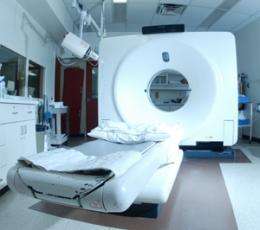
(PhysOrg.com) -- Studying heavy smokers, the National Cancer Institute’s 33-center National Lung Screening Trial found that significantly fewer who were screened with low-dose CT scans died from lung cancer than heavy smokers screened with standard chest X-rays.

The study involved more than 53,000 people in the United States, including more than 3,800 participants at the Washington University School of Medicine and Barnes-Jewish Hospital.

David S. Gierada, MD, professor of radiology at the Mallinckrodt Institute of Radiology, directed the study at the Washington University site. He says it already was known that low-dose CT could detect abnormalities in the lung at much earlier stages than a standard X-ray, but until now, it wasn’t known whether using the more sensitive screening technique could help prevent lung cancer deaths. This study, he says, answered that question.

“The patients who were randomized to be screened with the low-radiation dose CT had 20 percent fewer deaths than the group randomly selected to receive chest X-rays,“ Gierada says.

This video is not supported by your browser at this time.

Lung cancer is the No. 1 cancer killer in the United States, claiming more lives than the next three most deadly cancers combined. This year, more than 220,000 people in the United States will be diagnosed with lung cancer, and more than 157,000 will die from the disease.

Smokers in the study had used cigarettes for at least 30 “pack years.” That is, they smoked an average of at least one pack per day for 30 years. They were between 55 and 74 years old when they were enrolled in the study. Subjects received screening exams for three consecutive years during the study.

“It was well-known before the trial even started that CT scans could detect tumors when they were much smaller than can be detected by chest X-ray,” Gierada says. “But what wasn’t known with certainty was whether detecting cancers at that small size would translate into a reduced number of deaths.”

He says one potential drawback to using low-dose CT scans involve false positives. The scans detect a number of abnormalities in the lung that are not cancerous, and when that happens, more extensive follow-up testing is required, which can be expensive, cause anxiety and may, in some cases, even lead to surgical interventions for abnormalities that turn out not to be malignant. But Gierada says in spite of those potential drawbacks, the study clearly demonstrates that low-dose CT screening can reduce the risk of deaths.

“I think the results are pretty clear,” he says.

Provided by Washington University School of Medicine in St. Louis


Rank 5 /5 (1 vote)
Relevant PhysicsForums posts
  • A question about drug tolerance
    createdMay 23, 2012
  • Poor nutrition leading to overeating?
    createdMay 23, 2012
  • Math and dyslexia?
    createdMay 21, 2012
  • portable metabolism meter?
    createdMay 21, 2012
  • Rare medical conditions on 20/20 tonight
    createdMay 18, 2012
  • "Good" Cholesterol in Doubt
    createdMay 17, 2012
  • More from Physics Forums - Medical Sciences

More news stories

Cancer may require simpler genetic mutations than previously thought

Chromosomal deletions in DNA often involve just one of two gene copies inherited from either parent. But scientists haven't known how a deletion in one gene from one parent, called a "hemizygous" deletion, can contribute ...

Medicine & Health / Cancer

created 48 minutes ago | popularity not rated yet | comments 0 | with audio podcast

World Health Assembly endorses new plan to increase global access to vaccines

Ministers of Health from 194 countries at the Sixty-fifth World Health Assembly today endorsed a landmark Global Vaccine Action Plan (GVAP), a roadmap to prevent millions of deaths by 2020 through more equitable access to ...

Medicine & Health / Diseases, Conditions, Syndromes

created 56 minutes ago | popularity not rated yet | comments 0

In Spain, 70 percent of women use contraceptives during their first sexual encounter

Contraceptive use in Spain during the first sexual encounter is similar to other European countries. However, there are some geographical differences between Spanish regions: women in Murcia use contraceptives ...

Medicine & Health / Health

created 1 hour ago | popularity not rated yet | comments 0

P&G to add latches to make detergent packs safer

(AP) -- Procter & Gamble says it will change the design of packaging for its miniature laundry detergent product to deter children from eating the brightly colored packets that look like candy.

Medicine & Health / Health

created 5 minutes ago | popularity not rated yet | comments 0

Inherited DNA change explains overactive leukemia gene

A small inherited change in DNA is largely responsible for overactivating a gene linked to poor treatment response in people with acute leukemia.

Medicine & Health / Genetics

created 1 hour ago | popularity not rated yet | comments 0 | with audio podcast


Copy of the genetic makeup travels in a protein suitcase

Scientists from the Institute for Physical and Theoretical Chemistry at the University of Bonn have succeeded for the first time in the real time filming of the transport of an important information carrier in biological ...

Oldest Jewish archaeological evidence on the Iberian Peninsula

German archaeologists of the Friedrich Schiller University Jena found one of the oldest archaeological evidence so far of Jewish Culture on the Iberian Peninsula at an excavation site in the south of Portugal, ...

Apple CEO Cook gives up $75M in stock dividends

(AP) -- Apple says CEO Tim Cook is giving up $75 million in dividends on restricted stock.

SAfrica stops short of being disappointed over SKA verdict

South Africa stopped short of expressing disappointment after it failed to win the bid to single-handily host the world's most powerful radio telescope.

A mating dance with Popeye arms

A research team at Bielefeld University headed by the evolutionary biologist Dr. Holger Schielzeth is now studying how far a comparable mechanism is involved in mate choice among locusts. The male Siberian ...

Of mice and mental models: Neuroscientific implications of risk-optimized behavior in the mouse

(Medical Xpress) -- Regardless of an organism’s biological complexity, every encephalized animal continuously makes under-informed behavioral choices that can have serious consequences. Despite its ubiquity, ...