ND researcher says going green leads to happier workforce
Do human beings find more passion and meaning in working for the greater good — in realizing their jobs contribute more than just profit?
The answer is “yes,” especially with regard to sustainability, according to Ante Glavas, assistant professor of management in the University of Notre Dame’s Mendoza College of Business, who specializes in organizational behavior and is leading a research project called “Business for the Greater Good,” which already has yielded evidence that sustainability’s greatest impact is on employees who work for green companies.
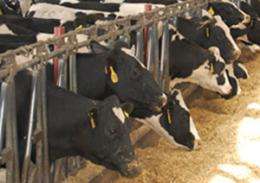
Glavas and his colleague, Associate Management Professor Matt Bloom, have teamed up with the Innovation Center for U.S. Dairy, which is working to reduce offsetting greenhouse gas emissions from dairy farms and businesses by, among other endeavors, creating sustainable, methane-powered farms.
About 2 percent of U.S. emissions are generated by the dairy industry, and Glavas became interested in applying his research to the project after learning that sustainability was a growth opportunity for dairy, not just a risk factor as it is for many companies facing pressure to go green.
“Sustainability actually is a top driver for increasing sales,” says Glavas, who conducts research in areas of corporate social responsibility, organizational behavior and international management. “They found that a lack of sustainability in the industry wouldn’t negatively affect consumers’ love of milk…they mostly care about taste and quality, but people will drink even more milk if they believed it is produced responsibly.”
Farmers, who traditionally have been reluctant to join the green movement, now are beginning to realize cost-saving and value-added opportunities associated with sustainability. New, methane-powered farms reduce or completely eliminate electricity costs, and feeding cows a better diet can create more efficient cows that produce less methane emissions.
Perhaps shoveling manure is more rewarding if it’s being shoveled into a “methane digester” to power a sustainable dairy farm.
Glavas and Bloom are researching this value-added theory, as the dairy industry moves forward with its greenhouse gas reduction projects. They are surveying 1,000 participating dairy farm, processing and retail employees and their spouses to learn more about what motivates them.
“We believe sustainability’s greatest impact could in fact be on employees,” Glavas says. “I have heard the theory validated already by owners of large-scale farms. So, we’re investigating job satisfaction and retention rates. Do employees go above and beyond in their duties because they believe in what the company is doing? We’re finding that people who work for green companies have a pride-in-ownership mentality and are happier and more productive.”
The research also will help Glavas reevaluate basic management theory.
“Management models often are based on the assumption that people only care about profit and work for money,” he says. “We want to understand employees’ perceptions of their employers’ social responsibility with regard to sustainability.”
Additionally, Glavas hopes to publish next year the first-ever academic review of corporate social responsibility and sustainability.
“It will review all the literature ever done on this topic, which really hasn’t been covered in terms of academic research,” Glavas says. “What really motivates people at work? For some reason, we’re finding sustainability is a motivator people really relate to.”
Provided by University of Notre Dame


