One step closer in finding treatment for amyloidosis
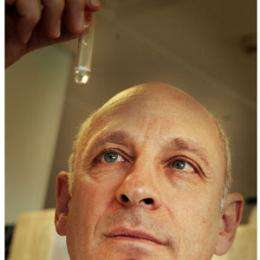
Image: Professor Mark Pepys
University College London scientists funded by the Medical Research Council (MRC) have devised a new approach to treatment of amyloidosis, according to new research published yesterday in Nature.
Systemic amyloidosis is a serious and usually fatal disease that can affect virtually any organ in the body. It is the cause of death in one per thousand of the population in developed countries.
Amyloid is composed of abnormal protein fibres that are deposited in the bodys tissues, damaging their structure and function. Diagnosis is often difficult and delayed so that, by the time the disease is recognised, most patients already have irreversible organ damage. The SAP protein from the blood accumulates in amyloid deposits and contributes to their formation and persistence.In work supported by the MRC spanning 30 years, Professor Mark Pepys FRS and his team from UCL discovered the role of SAP in amyloidosis and have been developing new treatments aimed at it. Initially they partnered with Roche to develop a small molecule drug, called CPHPC, which removes SAP from the blood but only partly clears it from amyloid deposits. This treatment stopped the accumulation of new amyloid but did not clear the existing deposits.
The latest development uses CPHPC to first remove SAP from that the blood so that antibodies to SAP can then be safely given to target the residual SAP in the amyloid deposits. In experimental models closely resembling human disease, this treatment swiftly eliminated all the amyloid. The next stage will be to test the treatment in patients and work towards clinical trials is now proceeding in collaboration with GlaxoSmithKline.
Professor Pepys, Director of the UCL Centre for Amyloidosis and Acute Phase Proteins, said: Our findings open up the prospect of a successful treatment for patients with amyloidosis and we are looking forward to developing the drugs for testing in the first human studies.
More information: The paper Antibodies to human serum amyloid P component eliminate visceral amyloid deposits was published yesterday in Nature.
Provided by
University College London
-
From lemons to lemonade: Reaction uses carbon dioxide to make carbon-based semiconductor,
27 comments
-
Every black hole contains a new universe: A physicist presents a solution to present-day cosmic mysteries,
209 comments
-
New silicon memory chip developed,
16 comments
-
Computing experts unveil superefficient 'inexact' chip,
45 comments
-
SpaceX private rocket blasts off for space station (Update),
41 comments
-
A question about drug tolerance
14 hours ago
-
Poor nutrition leading to overeating?
May 23, 2012
-
Math and dyslexia?
May 21, 2012
-
portable metabolism meter?
May 21, 2012
-
Rare medical conditions on 20/20 tonight
May 18, 2012
-
"Good" Cholesterol in Doubt
May 17, 2012
- More from Physics Forums - Medical Sciences
More news stories
The search for the earliest signs of Alzheimer's
(Medical Xpress) -- For the past five years, volunteers from the City of Berkeley and surrounding areas have come to Lawrence Berkeley National Laboratory to participate in an ongoing study thats changing ...
Medicine & Health / Alzheimer's disease & dementia
40 minutes ago |
not rated yet |
0
|
Study links mental health problems to poor prognosis in male cancer patients
Men suffering from psychiatric problems when diagnosed with cancer are more likely to die from the disease, according to a new study part-funded by the Wellcome Trust. The findings also reveal that those with ...
1 hour ago |
not rated yet |
0
Formal recognition of PMDD will lift stigma for women
A decision to recognise premenstrual dysphoric disorder as a genuine psychiatric condition will finally provide validation for this awful and poorly understood syndrome and alleviate the stigma ...
Medicine & Health / Psychology & Psychiatry
1 hour ago |
not rated yet |
0
Genetic 'reset switch' enables signaling pathway to induce multiple developmental outcomes for olfactory neurons
Within the nervous system, a handful of signaling pathways modulate development of a cornucopia of different neuronal subtypes. Even small alterations in neuron differentiation pathways can disrupt subsequent ...
Medicine & Health / Neuroscience
46 minutes ago |
not rated yet |
0
Lifting barriers to nutrition
(Medical Xpress) -- A University of Alberta study has revealed challenges that schools are working through, to adopt healthier food choices for their students in an effort to meet government guidelines for ...
26 minutes ago |
not rated yet |
0
Fungi shifted plant balance of power
Cooperating with fungi didn't just help the earliest plants spread across a barren, rocky landscape; it also played a decisive role in the rise of more complex plants with roots and leaves that make up most ...
Did ancient Mars have a runaway greenhouse?
Cosmic impacts that once bombed Mars might have sent temperatures skyrocketing upward on the Red Planet in ancient times, enough to set warming of the surface on a runaway course, researchers say.
Private supply ship flies by space station in test (Update)
The world's first private supply ship flew tantalizingly close to the International Space Station on Thursday but did not stop, completing a critical test in advance of the actual docking.
Researchers find a way to delay aging of stem cells
Stem cells are essential building blocks for all organisms, from plants to humans. They can divide and renew themselves throughout life, differentiating into the specialized tissues needed during development, ...
The myth of the disconnected telecommuter
(Phys.org) -- The assumption that employees who regularly telecommute will feel less attached to the organization they work for due to feeling isolated and disconnected is a myth, according to a study led ...
Marine scientist discusses cod colonization
New evidence suggests that Atlantic cod may have the ability to affect entire food webs in both benthic and pelagic marine ecosystems, according to a University of Maine marine scientist, writing in the Proceedings of ...
Oct 21, 2010
Rank: not rated yet
AMYLOIDOSIS SUPPORT GROUPS
ASG wwwamyloidosissupport
Toll Free 866-404-7539
National Organization Member of NORD
amyloidosisonline - Over 885 have joined
"Don't Take Your Organs To Heaven, Heaven Knows We Need Them Here"